Italiano
 Français
 Deutsch
 Español
Hi-Fi Guides and Tutorials
Cayin ID6: the all-in-one center for desktop audio
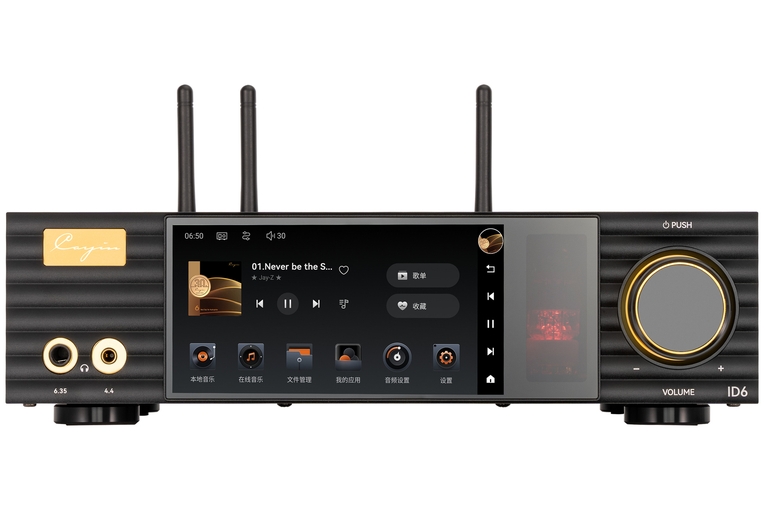
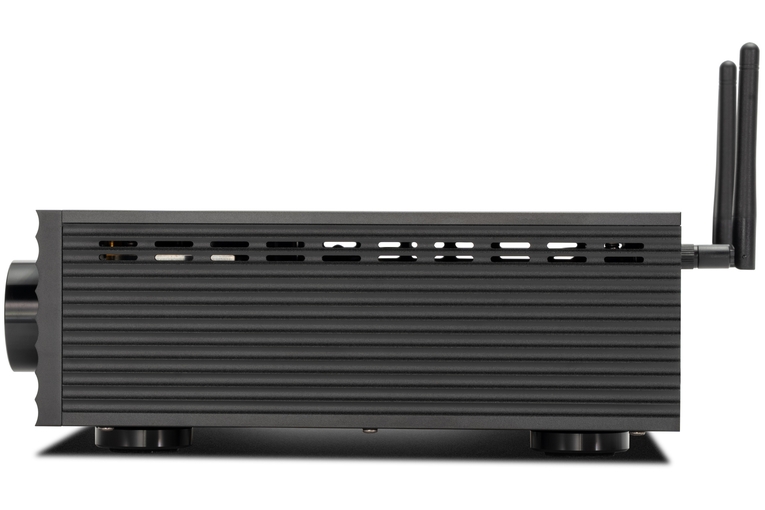
The Cayin ID6 is an all-in-one desktop audio system designed to bring together network streamer, digital source, DAC, preamplifier and headphone amplifier functions in a single unit. The goal is to provide a single control center for headphone listening and for configurations with amplifiers, active speakers or other audio components.
Its design is aimed at those who want to organize a desktop system without necessarily separating every function into a dedicated unit. Streaming playback is complemented by local content management, USB DAC input and a range of connections that also allows it to be integrated into a more elaborate Hi-Fi chain.
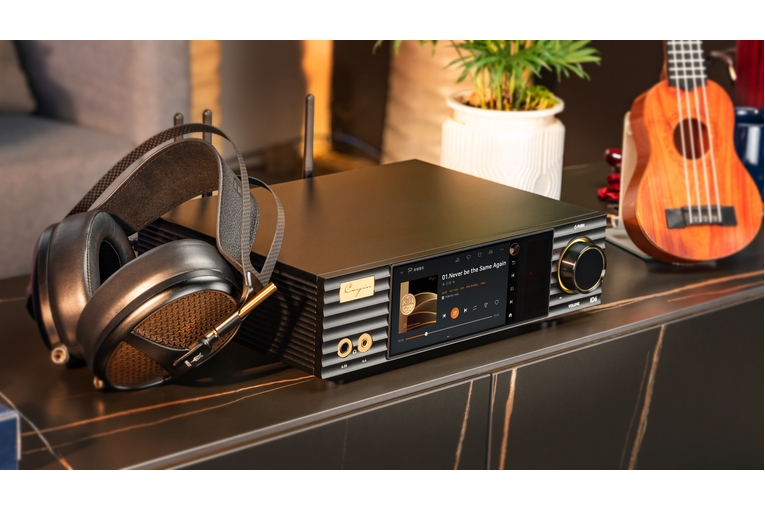
An audio center for the desktop
The operational core of the ID6 is a customized Android 14 platform, designed to directly manage playback functions and compatible streaming applications. The device can be connected to the network via Ethernet or Wi-Fi; Bluetooth further expands the wireless access options.
Local playback can be carried out from USB storage or through an optional M.2 NVMe SSD in the 2280 format. The latter option makes it possible to provide dedicated internal storage for one’s music library, without describing the drive as necessarily installed as standard. System-level bit-perfect playback completes the range of digital functions declared for the player.
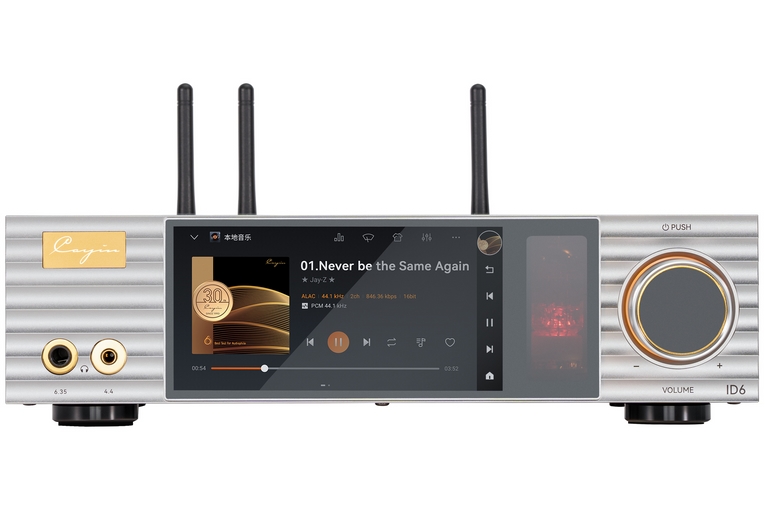
Control can be carried out from the integrated touchscreen or through the Cayin Control App. The application complements the controls available on the device and allows playback and some settings to be managed over the local network.
Digital section and high-resolution support
The conversion section uses two ESS ES9082Q chips, with one converter dedicated to each channel. The USB interface is based on XMOS XU316. The specifications indicate support for PCM signals up to 32 bit/768 kHz and native DSD up to DSD512.
The Cayin ID6 can receive a digital signal through the USB DAC input and also features HDMI ARC, I²S output, and optical and coaxial digital connections. The choice of interface depends on the source and the connected component, but the range of connections makes it possible to consider the ID6 not only as a headphone listening device, but also as a digital source in a broader system.
Balanced headphone amplification
One of the central elements of the design is the four-channel headphone amplifier, which is fully discrete and features a balanced architecture. The declared power reaches up to 4.0 + 4.0 W into 16 Ω through the balanced output. This figure refers to a specific impedance and a particular connection; it therefore does not constitute a general indication of compatibility with any headphone.
The user can select Class A or Class AB operation. The two modes represent different operating configurations of the amplification section and can be selected according to the headphones used and individual preferences. The discrete and balanced topology is integrated into the system, without requiring a separate headphone amplifier.
Three voicings and two operating modes
The ID6 provides three selectable voicings: Classic Tube, Modern Tube and Solid-State. The two tube settings use 12AU7 tubes, while Solid-State corresponds to solid-state mode.
These options make it possible to adjust the amplification profile without replacing the unit. The names describe product functions and should not be interpreted as a guarantee of a uniform sonic result with every headphone or in every configuration.
Display and control
Local control is provided through a 6-inch touchscreen with FHD+ resolution. The display allows users to interact with the customized Android platform, select sources, manage playback and adjust the main settings directly from the desktop.
The Cayin Control App offers an alternative way to control the unit from a different position. The dual control system, locally and through the application, is consistent with the nature of the ID6: a system designed to remain at the center of the digital experience, but also usable without continuously operating the front panel.
Connections and use cases
The XLR and RCA outputs can be used as line-level or preamplified outputs, allowing the ID6 to be connected to an amplifier, active speakers or other elements of the audio chain. The output terminology should remain distinct: the brief documents the presence of XLR and RCA connectors and their use as line-level or preamplified outputs, without automatically extending the balanced attribute to both connections.
In a basic configuration, the ID6 can serve as a streamer, DAC and headphone amplifier. In a more elaborate system, it can instead function as a digital source and preamplifier, with output to external components. The presence of Ethernet, Wi-Fi, Bluetooth, USB storage, support for NVMe SSDs, USB DAC, HDMI ARC, I²S, and optical and coaxial connections leaves room for different configurations, depending on the sources and equipment already in place.
Conclusions
The Cayin ID6 concentrates in a single system the functions that would normally be distributed among several components: streaming, local playback, digital-to-analog conversion, preamplification and headphone amplification. The Android 14 platform, 6-inch FHD+ touchscreen and Cayin Control App define the control interface, while support for PCM up to 32 bit/768 kHz and native DSD up to DSD512 describes the declared capabilities of the digital section.
The headphone section adds a balanced, discrete, four-channel architecture, with a choice between Class A and Class AB and three voicings, two of which are based on 12AU7 tubes. Overall, the ID6 presents itself as a platform intended for those seeking flexibility and a concentration of functions in a desktop environment, while retaining the ability to expand the system through analog outputs, digital connections and support for local playback.