
 Italiano
 Français
 Deutsch
 Español
LAiV Harmony R2R DAC

LAiV Harmony R2R DAC
3.689,00 €
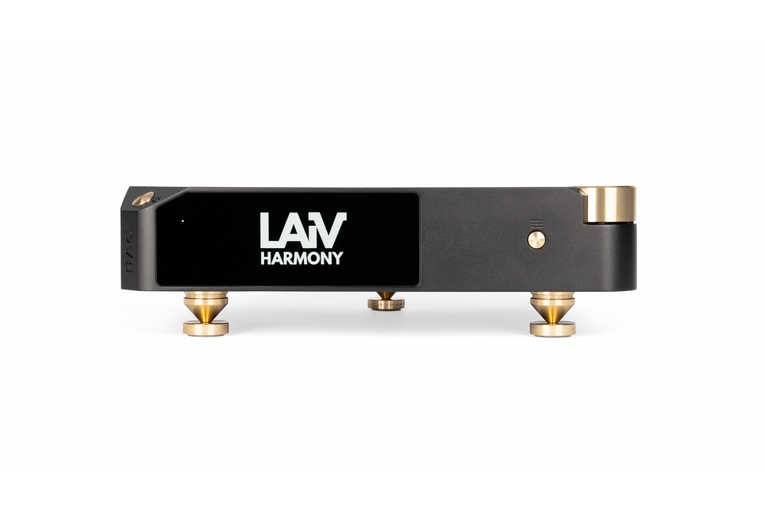
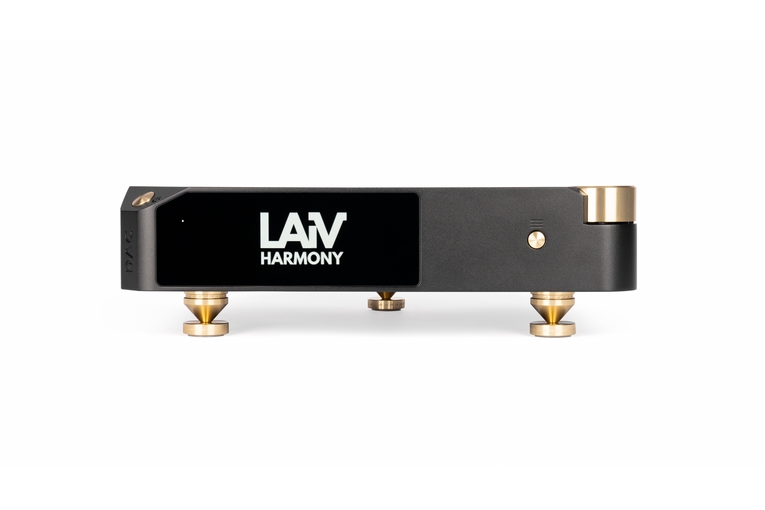
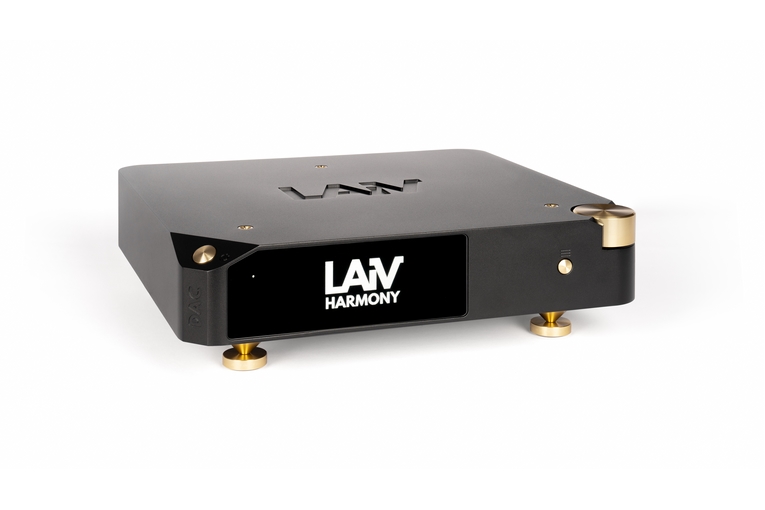
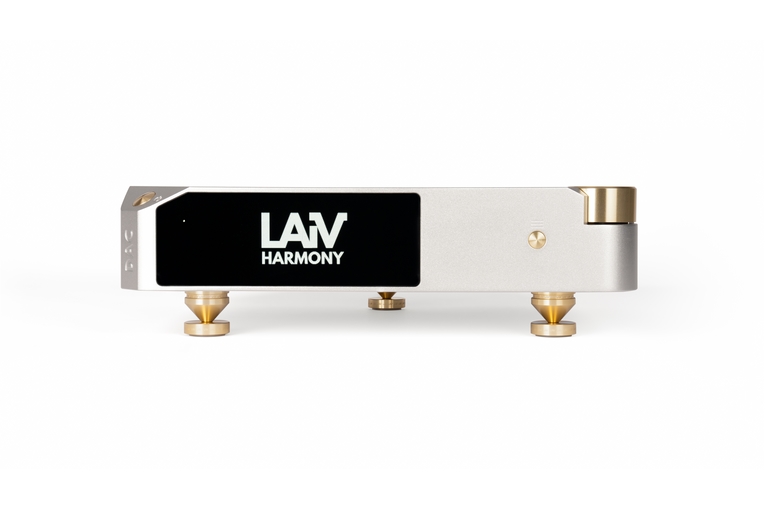
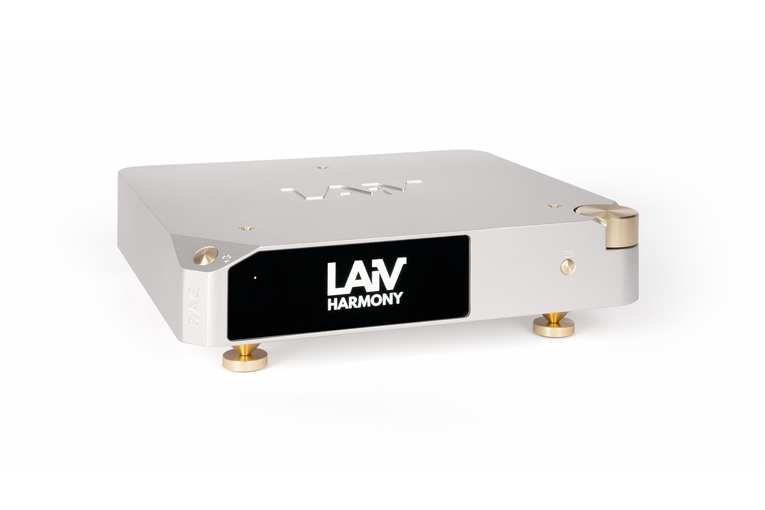
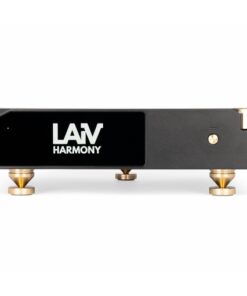
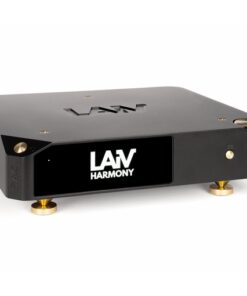
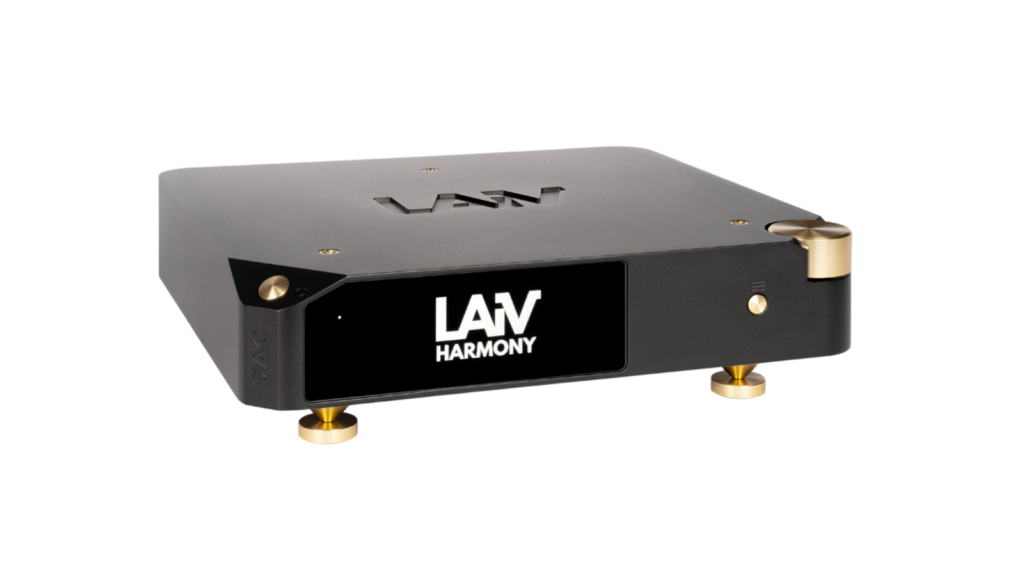
Balanced Discrete R2R DAC OS/NOS 768kHz DSD256 Black The Laiv Harmony DAC combines a minimalist, elegant design with balanced discrete R2R digital-to-analog conversion. Supporting sampling rates up to DSD256 and PCM 768kHz, together with the internal CCHD-957 FEMTO clock, this DAC provides sound reproduction as faithful to the original as possible. In addition, the modular design of the Harmony DAC ensures unparalleled flexibility, simple upgrades and easy maintenance.
LAiV Harmony R2R DAC is a digital-to-analog converter designed around a Balanced Discrete R2R architecture. Its circuit uses a ladder network made up of discrete resistors with a tolerance of 0.05%, arranged in a balanced configuration for digital signal conversion. The result is a solution for audio systems requiring versatile digital inputs, both RCA and XLR outputs, and direct control of the main operating parameters.
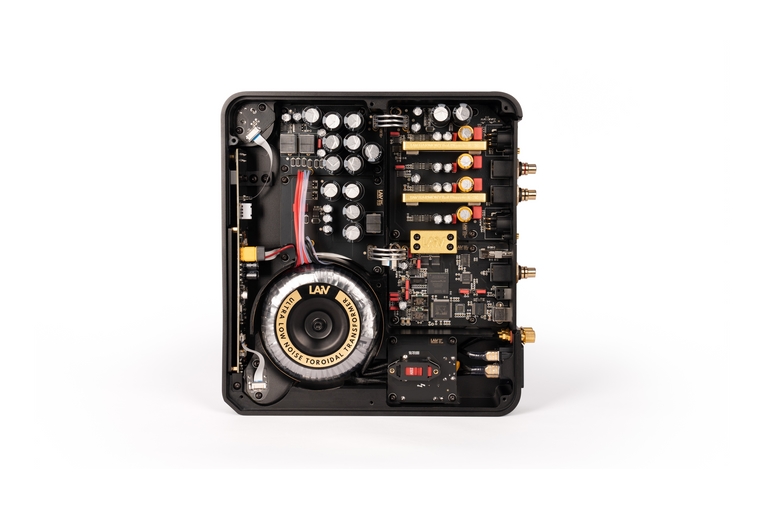
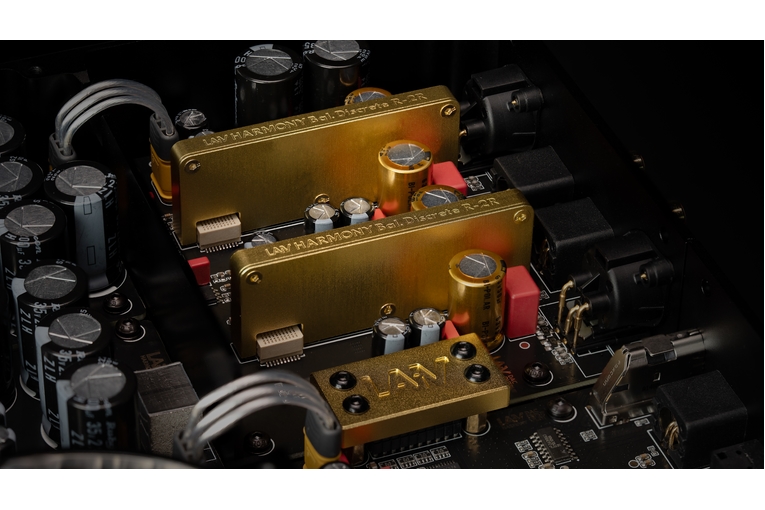
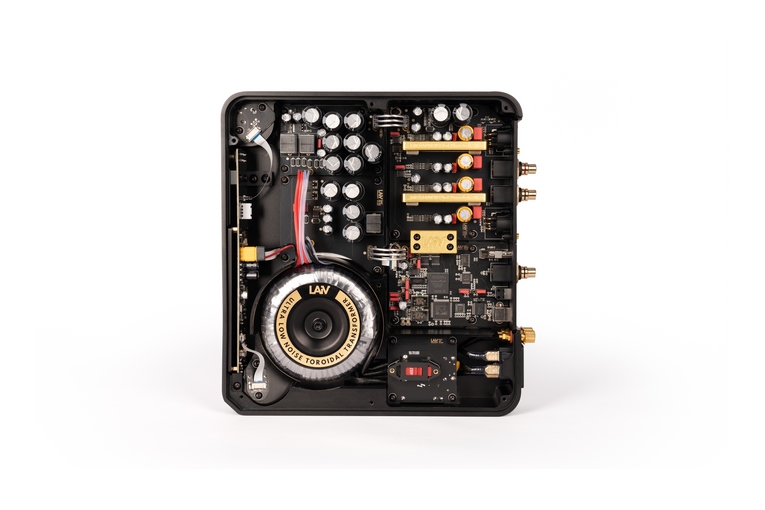
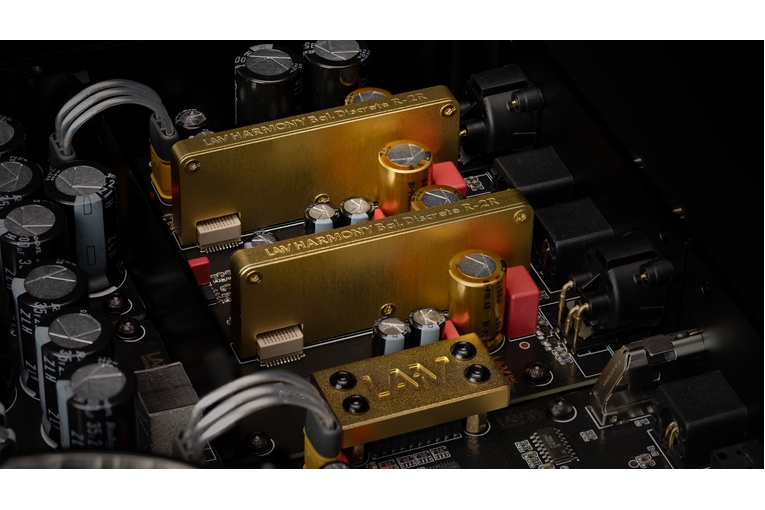
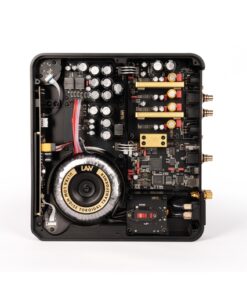
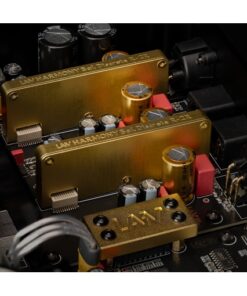
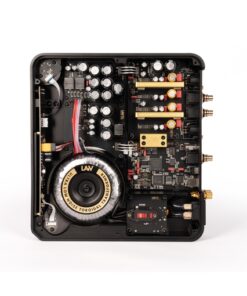
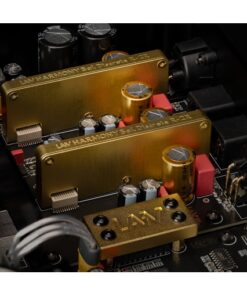
The design combines minimalist aesthetics with modular construction. The DAC modules, power supply modules and input stages are designed to be upgraded or replaced, making maintenance easier and leaving room for future work on the product. Harmony is therefore designed not only as a DAC to be integrated into an existing system, but also as a component that can be configured over time, with an internally organized sectional structure.
Balanced discrete-component R2R conversion
R2R technology, also known as a ladder DAC, is based on a resistor network that translates digital data into an analog signal. In the LAiV Harmony, this network is made with selected discrete components and a stated tolerance of 0.05%. The architecture is balanced, a feature also reflected in the availability of the stereo XLR output, alongside the stereo RCA output.
The DAC can operate in OS or NOS mode, according to the configuration provided by the device. Digital management is entrusted to an Intel Altera Cyclone FPGA processor. This platform coordinates the processing of the different input signals and the operation of the conversion section, maintaining a single control interface for sources with different characteristics.
Clock and audio section components
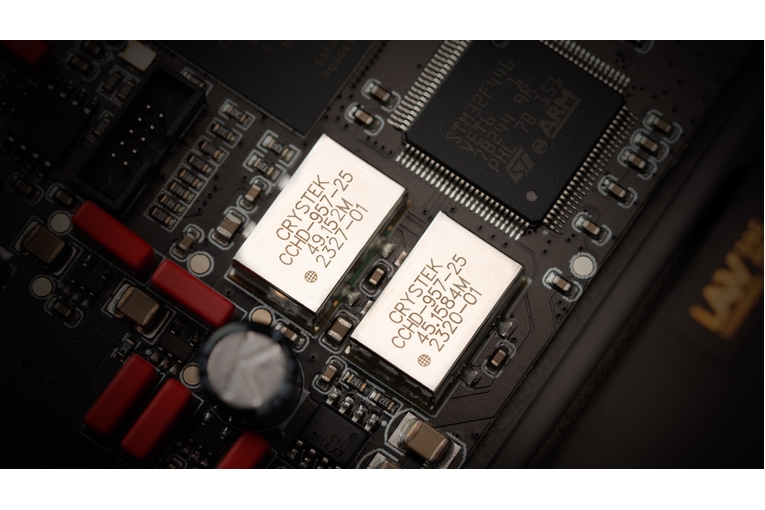
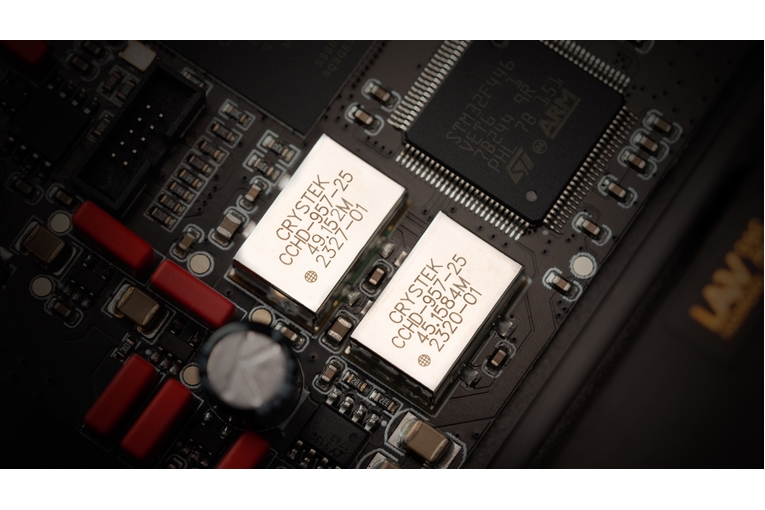
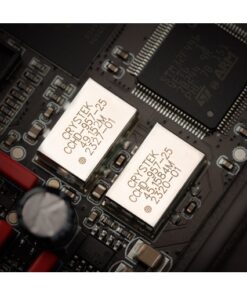
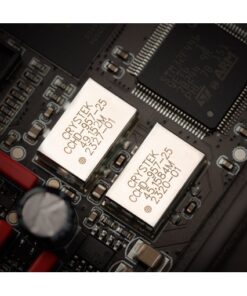
System timing is entrusted to a Crystek CCHD-957 FEMTO, indicated as a very-low-phase-noise oscillator. The internal clock serves as the reference for the DAC architecture and contributes to the precise management of digital data before conversion. When using the I2S input, it is also possible to choose between the DAC’s local clock and the clock from the connected I2S source.
The power supply section uses Audio Note Kaisei and Rubycon ZLH capacitors. These components are integrated into the different sections of the design, together with the other elements dedicated to power supply and conversion. The presence of separate modules for the DAC, power supply and inputs reflects Harmony’s modular philosophy, focused on easier upgrades and replacements.
Digital inputs and supported formats
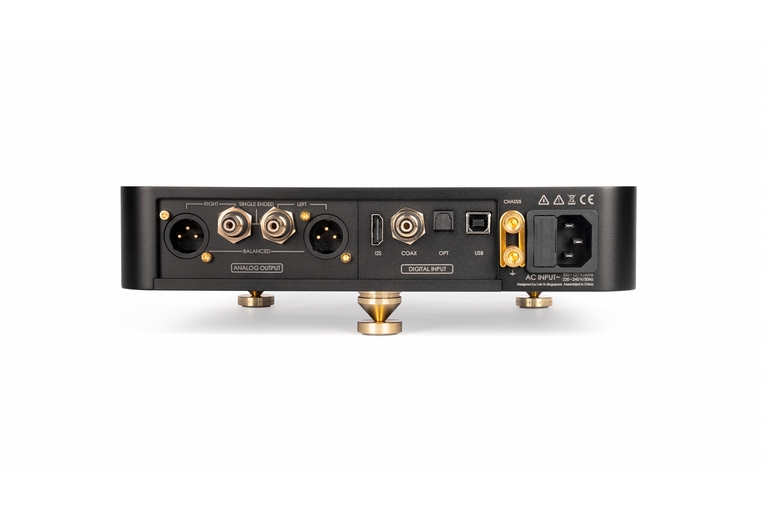
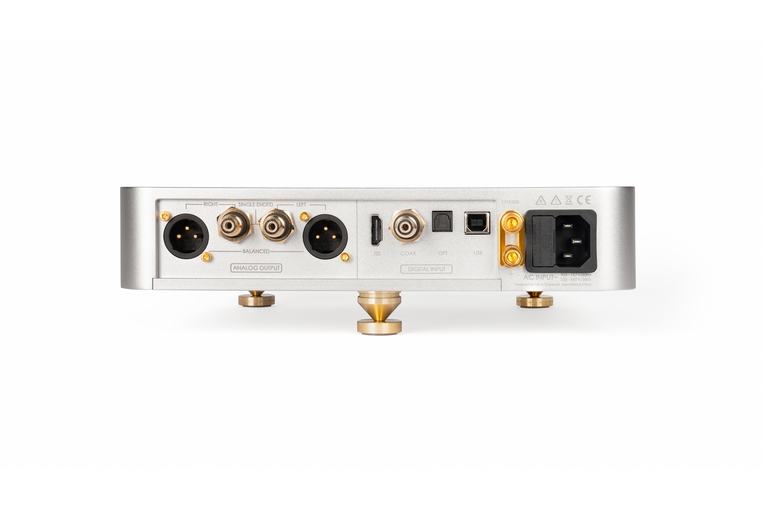
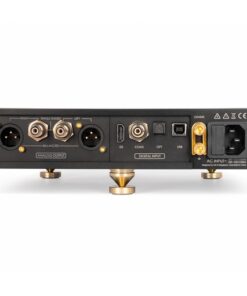
Harmony offers four digital inputs: USB-B, optical, coaxial and I2S. The USB-B port is suitable for connection to a computer or a digital source equipped with this output and supports PCM from 44,1 kHz to 768 kHz, as well as DSD64, DSD128 and DSD256. The I2S connection also reaches PCM 768 kHz and DSD256, according to the characteristics of the source used.
- USB-B: PCM from 44,1 to 768 kHz and DSD64–DSD256.
- I2S: PCM from 44,1 to 768 kHz and DSD256.
- Optical input: PCM from 44,1 to 192 kHz.
- Coaxial input: PCM from 44,1 to 192 kHz.
The optical and coaxial inputs are therefore intended for SPDIF sources with PCM signals up to 192 kHz. In the case of compatible CD signals transmitted via SPDIF, the display can retrieve essential information such as track identifier and playback time. Actual compatibility naturally depends on the signal sent by the source and its connection to the correct input.
Outputs and system integration
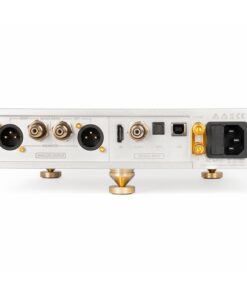
The rear panel features a stereo XLR output and a stereo RCA output. This equipment allows Harmony to be connected to electronics with balanced inputs or to components equipped with RCA analog inputs. The two output types expand the possibilities for integration with preamplifiers, integrated amplifiers or other analog devices, without limiting the system to a single connection standard.
The stated output impedance is 1200 ohms for XLR and 600 ohms for RCA. A chassis ground connection and fuse holder are also available, together with the power socket. The correct choice of cables and verification of the inputs on the connected electronics remain aspects to consider when installing the DAC.
OLED display and controls
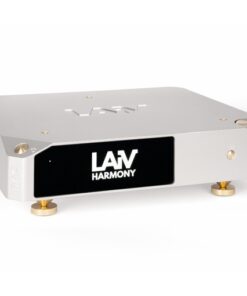
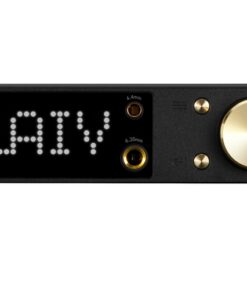
The front panel houses a 3.83-inch white monochrome OLED display, with a resolution of 320 × 132 pixels and 16 grayscale levels. The screen shows the selected source, sampling rate, playback status and DAC configuration. The main information is therefore available directly on the panel, without requiring an external device to check the operating status.
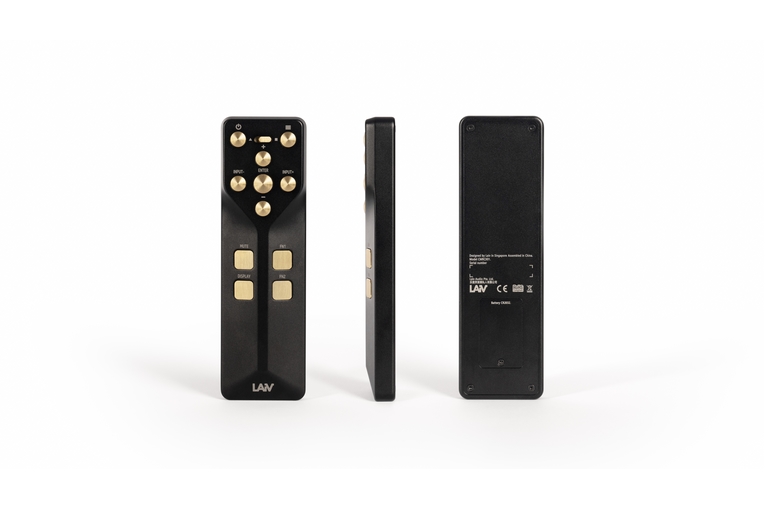
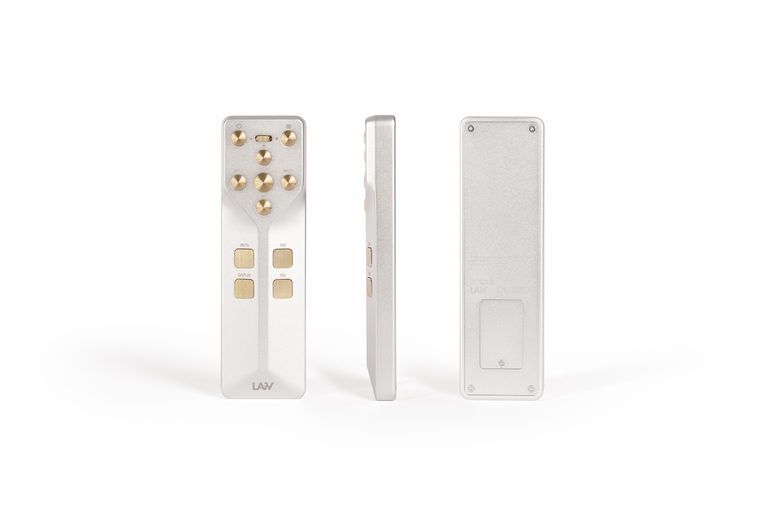
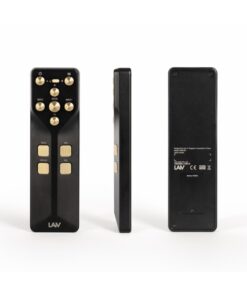
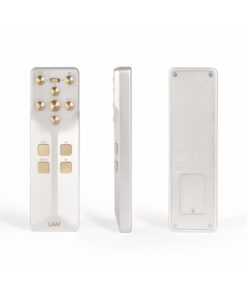
The interface includes buttons, a Menu button and a rotary navigation knob. The control layout is designed to allow everyday use while reducing the risk of unintended operation. The included remote control allows Harmony to be operated remotely; its buttons are customizable and a switch allows two devices to be controlled simultaneously. The remote control has a stated weight of 157 grams.
Modular structure and installation
Modularity is one of the product’s central elements. The design allows work to be carried out on the DAC modules, power supply modules and input stages. Upgrades and replacements are thus designed into the device’s structure, with the aim of simplifying future operations and maintenance. Any intervention must be carried out according to the procedures specified for the product.
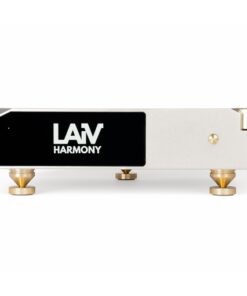
The package includes three spikes with alignment card, the remote control, a power cable and a cleaning cloth. The spike feet are 25 mm high. The chassis is available in Black and Silver finishes. The stated dimensions are 75 × 250 × 255 mm, while the indicated weight for the DAC is 4.3 kg. Before positioning the device, it is advisable to check the available space for connectors and cables, especially at the rear.
Main technical specifications
- Type: Discrete-component R2R DAC, balanced architecture.
- Processor: Intel Altera Cyclone FPGA.
- Clock: Crystek CCHD-957 FEMTO.
- Frequency response: 20 Hz–20 kHz, within ±0.25 dB.
- THD+N: 0.0035%.
- Crosstalk: better than 110 dB between 20 Hz and 20 kHz.
- Signal-to-noise ratio: better than 123 dB, A-weighted.
- Outputs: stereo XLR and stereo RCA.
- Power supply: 100–127 VAC or 220–240 VAC, 50/60 Hz.
- Maximum consumption: 10 W.
Overall, the LAiV Harmony R2R DAC combines discrete-resistor conversion, management of high-resolution digital sources, XLR and RCA analog outputs, and a modular structure. The OLED display provides essential operating information, while the front-panel controls and remote control make input selection and configuration accessible. It is a solution for those seeking a DAC with numerous digital connections, PCM and DSD support according to the input used, and the possibility of evolving its internal modules.
Main features
- Maximum consumption: 10 W
- Capacitors: Audio Note Kaisei and Rubycon ZLH
- CD information via SPDIF: Track ID and Play Time
- Clock: CCHD-957 FEMTO Clock Ultra-Low Phase Noise Oscillator
- Clock: Crystek crystal clocks
- Coaxial PCM support: 44,1 kHz–192 kHz
Technical specifications
| Weight | 7.0000 |
|---|---|
| Width | 43.0000 |
| Depth | 34.0000 |
| Height | 14.0000 |
| Maximum consumption | 10 W |
| Capacitors | Audio Note Kaisei and Rubycon ZLH |
| CD information via SPDIF | Track ID and Play Time |
| Clock | CCHD-957 FEMTO Clock Ultra-Low Phase Noise Oscillator |
| Clock | Crystek crystal clocks |
| Coaxial PCM support | 44,1 kHz–192 kHz |
| Controls | Buttons and rotary knob |
| Crosstalk | Better than 110 dB, 20 Hz–20 kHz |
| DAC architecture | Balanced Discrete R2R |
| DAC type | Discrete-resistor R2R ladder DAC |
| Design | Modular |
| Display grayscale | 16 levels |
| Displayed information | Input source, sampling rate, playback status and DAC configuration |
| Display resolution | 320 × 132 pixels |
| Display diagonal size | 3.83 inches |
| Display type | White monochrome OLED |
| Frequency response | 20–20 kHz, within ±0.25 dB |
| I2S clock selection | DAC local clock or clock from the incoming I2S source |
| I2S PCM support | 44,1 kHz–768 kHz |
| Optical PCM support | 44,1 kHz–192 kHz |
| Power supply | 100–127 VAC / 220–240 VAC, 50/60 Hz |
| Remote control weight | 157 g |
| Resistor tolerance | 0.05 % |
| Signal-to-noise ratio | Better than 123 dB, A-weighted |
| Spike foot height | 25 mm |
| THD+N | 0.0035 % |
| Upgradable modules | DAC modules, power supply modules and input stages |
| USB DSD support | DSD64–DSD256 |
| USB PCM support | 44,1 kHz–768 kHz |
Technical insights
The specifications provided help compare the product’s configuration, compatibility and performance.
Related products
LAiV Crescendo VERSE R2R · Aune YUKI SE · Aune YUKI
Frequently asked questions
Which digital inputs does the LAiV Harmony R2R DAC offer?
It has one USB-B input, one optical input, one coaxial input and one I2S input. USB-B and I2S support PCM up to 768 kHz and DSD256; optical and coaxial support PCM up to 192 kHz.
Does the Harmony DAC have balanced outputs?
Yes. The rear panel features a balanced stereo XLR output and a stereo RCA output.
Which formats does the USB-B input support?
The USB-B input supports PCM from 44,1 kHz to 768 kHz and DSD from DSD64 to DSD256.
What does the DAC screen display?
The 3.83-inch white monochrome OLED display shows the input source, sampling rate, playback status and DAC configuration. With compatible CD signals via SPDIF, it can also display Track ID and Play Time.
Is the LAiV Harmony designed for future upgrades?
Yes. The modular design includes upgradable or replaceable DAC modules, power supply modules and input stages, facilitating future work and maintenance.
| Weight | 7 kg |
|---|---|
| Dimensions | 34 × 43 × 14 cm |
| Maximum consumption | 10 W |
| Capacitors | Audio Note Kaisei and Rubycon ZLH |
| CD information via SPDIF | Track ID and Play Time |
| Clock | CCHD-957 FEMTO Clock Ultra-Low Phase Noise Oscillator |
| Coaxial PCM support | 44,1 kHz–192 kHz |
| Controls | Buttons and rotary knob |
| Crosstalk | Better than 110 dB, 20 Hz–20 kHz |
| DAC architecture | Balanced Discrete R2R |
| DAC type | Discrete-resistor R2R ladder DAC |
| Design | Modular |
| Display grayscale | 16 levels |
| Displayed information | Input source, sampling rate, playback status and DAC configuration |
| Display resolution | 320 × 132 pixels |
| Display diagonal size | 3.83 inches |
| Display type | White monochrome OLED |
| Frequency response | 20–20 kHz, within ±0.25 dB |
| I2S clock selection | DAC local clock or clock from the incoming I2S source |
| I2S PCM support | 44,1 kHz–768 kHz |
| Optical PCM support | 44,1 kHz–192 kHz |
Only logged in customers who have purchased this product may leave a review.
Related products
Audio DACs
Audio DACs
Audio DACs
Reviews
There are no reviews yet.