
 Italiano
 Français
 Deutsch
 Español
ONIX Zenith XDA20
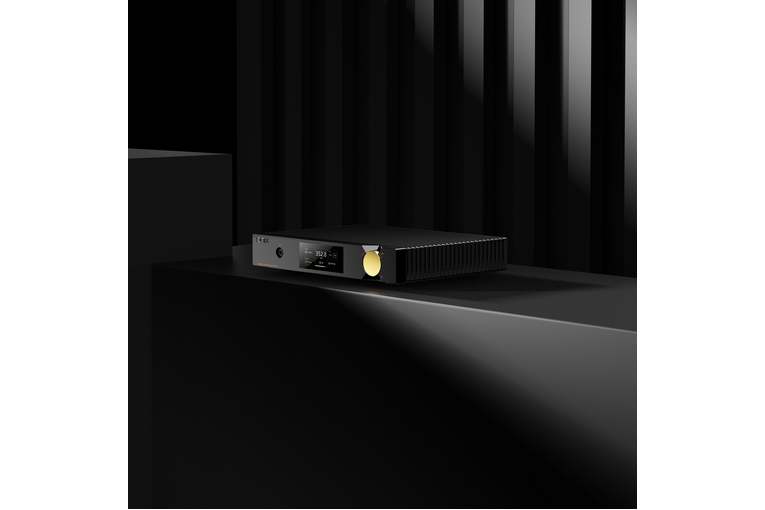
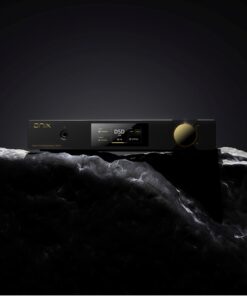
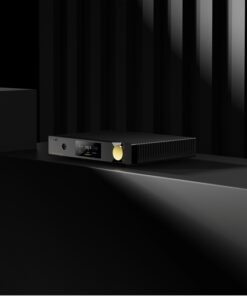

ONIX Zenith XDA20
2.599,00 €
ONIX Zenith XDA20, DAC converter, TPA6120 headphone amplifier, dual Sabre ES9039PRO DAC paired with a proprietary I/V architecture, 32-bit 768kHz PCM and DSD512, configurable I2S HDMI, BNC, AES/EBU XLR, coaxial, Toslink optical, USB-B, balanced XLR outputs, RCA, 6.35mm headphone jack output, XMOS XU316, SPDIF input PCM up to 24bit/192kHz, DSD64 DoP, I2S input PCM up to 32bit/768kHz, Native DSD up to DSD512, USB Audio input: PCM up to 32bit/768kHz, Native DSD up to DSD512, 3.4″ touchscreen.
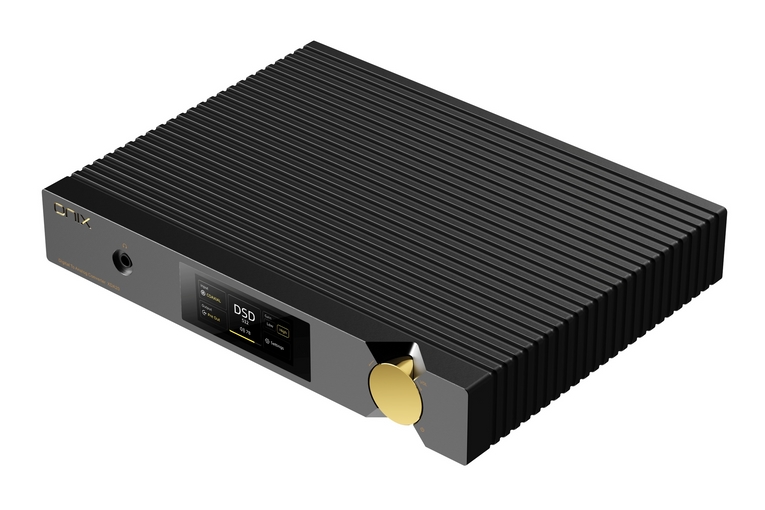
ONIX Zenith XDA20 is a digital-to-analogue converter with a headphone amplifier, designed to fit into hi-fi configurations equipped with different digital sources. The XDA20 model combines DAC conversion, RCA and XLR analogue outputs, and a 6.35 mm headphone output, offering three operating modes: Pre-out, Line-out and headphone amplification. Operation is managed via a 3.4-inch colour touchscreen, a multifunction knob and the included remote control.
Digital conversion with dual ES9039Pro
The digital core of the ONIX Zenith XDA20 consists of two ESS ES9039Pro DAC chips. The conversion is supported by the proprietary “Brighton” I/V architecture, developed internally by Shanling and based on eight OPA1611 operational amplifiers. This solution is designed to manage the digital signal before its conversion to analogue, maintaining a structure suitable for high-resolution sources and files.
The device supports PCM streams up to 32 bit and 768 kHz and native DSD up to DSD512 when the signal arrives through the USB or I2S inputs. Operation varies according to the connection used, so it is useful to distinguish the capabilities of the individual inputs:
- USB-B: PCM up to 32 bit/768 kHz and native DSD up to DSD512;
- I2S via HDMI: PCM up to 32 bit/768 kHz and native DSD up to DSD512;
- S/PDIF inputs: PCM up to 24 bit/192 kHz and DSD64 via DoP.
The USB interface uses an XMOS XU316. The presence of multiple connection modes makes it possible to integrate the XDA20 with different digital sources, selecting the input best suited to the system and the available signal format each time.
Headphone amplifier and gain control
The stage dedicated to headphone listening uses the TPA6120 amplifier chip. The output is available on the front panel through a 6.35 mm jack and has two gain levels selectable from the touchscreen: Low and High. This setting allows the operating level to be selected according to the connected headphones, without presenting the product as compatible with specific models not indicated in the available data.
In High gain mode, the headphone output reaches 1620 mW at 32 ohms and 252 mW at 300 ohms. In Low gain mode, the declared value is 101 mW at 32 ohms. The output impedance is 3.3 ohms. The headphone output is also specified with a frequency response from 20 Hz to 40 kHz with a variation of -0.5 dB, total harmonic distortion plus noise of 0.003%, a dynamic range of 121 dB and a signal-to-noise ratio of 120 dB.
Volume can be adjusted by turning the multifunction knob or using the “VOLUME +/-” buttons on the remote control. In Line-out mode, however, volume control is disabled: the level is therefore managed by the equipment connected downstream, according to the system configuration.
RCA and XLR analogue outputs
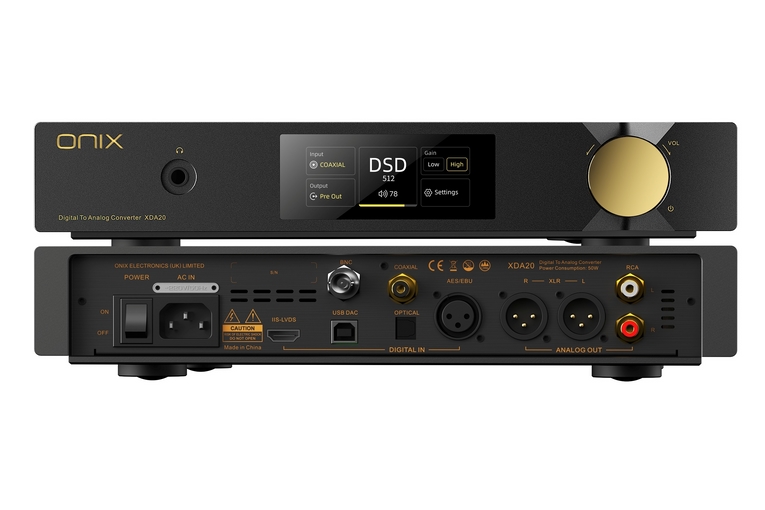
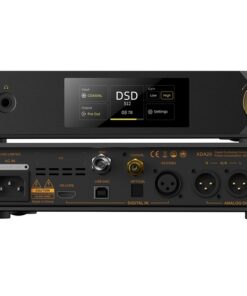
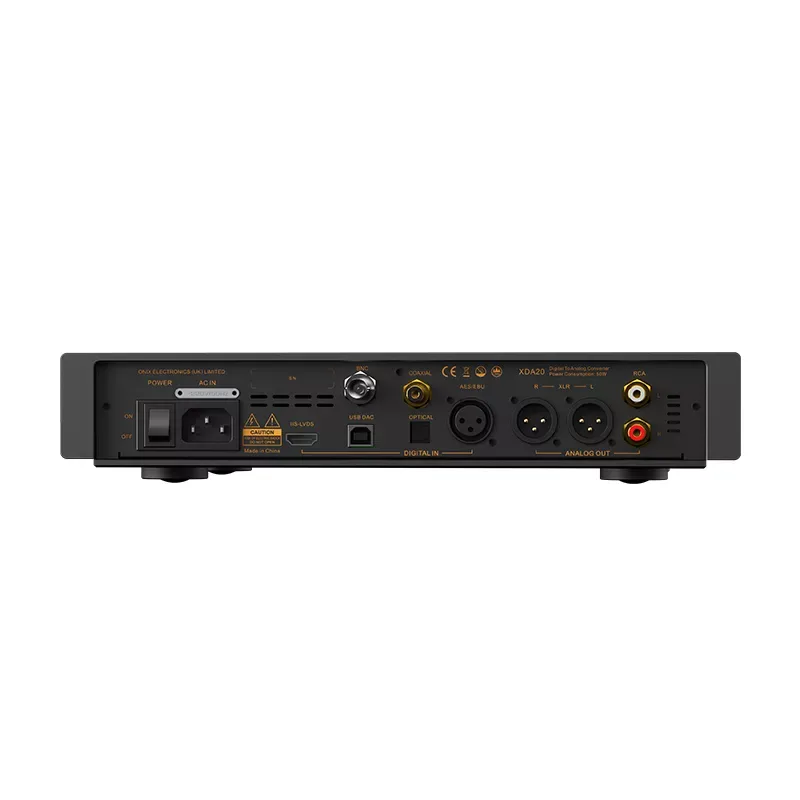
The Zenith XDA20 can be connected both to electronics with single-ended inputs and to components equipped with balanced connections. The rear panel features a single-ended RCA stereo output and a balanced XLR stereo output. Selection between Pre-out, Line-out and headphone output allows the converter to be adapted to different uses, from integration into a hi-fi system to personal listening.
The RCA output is specified with a level of 2.1 V, a frequency response of 20 Hz-40 kHz at -0.5 dB, THD+N of 0.0003%, a dynamic range of 123 dB, channel separation of 122 dB and a signal-to-noise ratio of 123 dB. The indicated noise value is 117 dB.
The XLR output has a level of 4.2 V. The frequency response is 20 Hz-40 kHz at -0.5 dB, while THD+N is 0.0003%. The declared data includes a dynamic range of 127 dB, channel separation of 126 dB, a signal-to-noise ratio of 127 dB and noise of 114 dB. These values describe the specifications of the analogue outputs and should not be interpreted as a guarantee of identical results in every system.
Complete digital connectivity
The range of inputs allows numerous digital sources to be connected. The rear panel provides:
- a USB-B input for use as a USB DAC;
- an I2S via HDMI input, also identified as an IIS-LVDS input;
- an RCA coaxial input;
- a Toslink optical input;
- a BNC digital input;
- an AES/EBU digital input.
The variety of connections makes the XDA20 suitable for systems in which computers, streamers, digital transports and other sources with coaxial, optical, BNC, AES/EBU or I2S outputs coexist. Actual compatibility nevertheless depends on the format supported by the source and the type of connection selected. In particular, the resolution limits differ between USB and I2S on the one hand and S/PDIF inputs on the other, as indicated in the specifications.
Power supply and construction
The power supply section uses two Talema transformers, rated at 25 W and 15 W respectively, supported by four 3300 µF/63 V capacitors. The configuration is intended to supply power to the various circuits of the converter and headphone stage. Operation is designed for mains power at approximately 230 V/50 Hz.
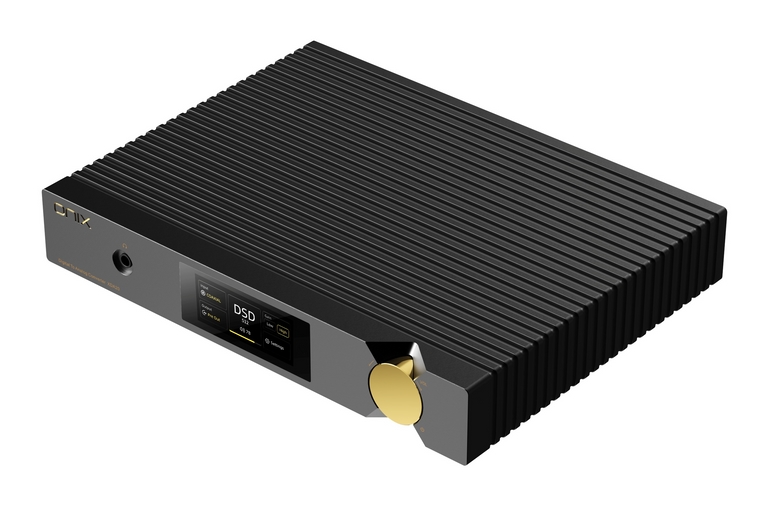
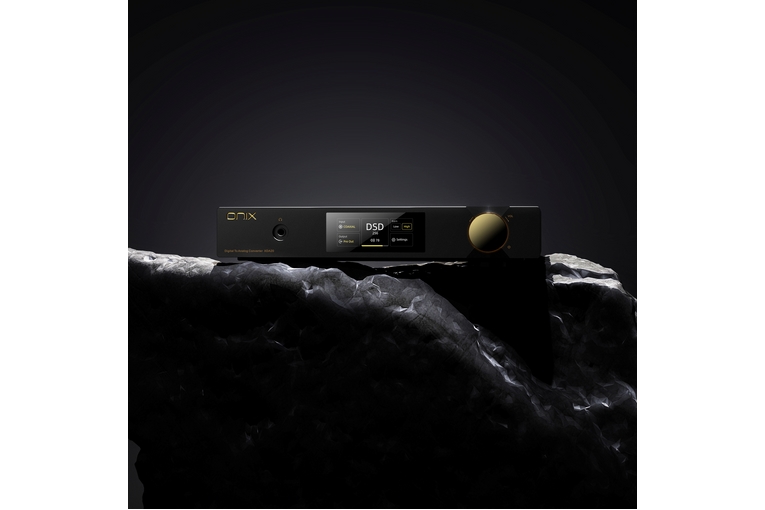
The chassis is made of CNC-machined aluminium and follows the black and gold aesthetic of the ONIX range. The front panel integrates a 3.4-inch colour touchscreen, a navigation wheel and the 6.35 mm jack headphone output. A system indicator and remote-control receiver are also present. The combination of physical controls, touch interface and remote control makes it possible to manage the main functions without necessarily having to use the digital source.
Which configuration is it suitable for
The ONIX Zenith XDA20 is a solution to consider when looking for a single device capable of serving as both a DAC and headphone amplifier, while also retaining analogue outputs for a hi-fi system. The presence of RCA and XLR allows the connection type to be selected according to the inputs of the subsequent electronics, while the front jack enables headphone listening.
Before purchasing, it is advisable to check the type of output available on the source and the format of the digital content. For computers and sources equipped with USB-B or I2S, PCM up to 32 bit/768 kHz and native DSD up to DSD512 are supported; for coaxial, optical, BNC and AES/EBU, the data indicates PCM up to 24 bit/192 kHz and DSD64 via DoP. Volume control is available through the knob and remote control, but not in Line-out mode.
With dual ES9039Pro, the XMOS XU316 interface, TPA6120 amplification and extensive connectivity, ONIX Zenith XDA20 brings digital conversion, analogue outputs and headphone listening together in a single chassis. The declared specifications, gain selection and the possibility of choosing between RCA and XLR connections complete an equipment package designed for advanced digital systems and configurations with different sources.
Main features
- Product type: Digital-to-analogue converter
- Energy consumption: 5W0
- RCA analogue output: Yes
- XLR analogue output: Yes
- AES/EBU digital input: Yes
- BNC digital input: Yes
Technical specifications
| Weight | 9.0000 |
|---|---|
| Product type | Digital-to-analogue converter |
| Energy consumption | 5W0 |
| RCA analogue output | Yes |
| XLR analogue output | Yes |
| AES/EBU digital input | Yes |
| BNC digital input | Yes |
| IIS-LVDS digital input | Yes |
| Optical digital input | Yes |
| USB DAC digital input | Yes |
| Display | Touchscreen |
| Headphone gain levels | Low / High |
| Volume control in LINE OUT mode | Disabled |
| Power supply | ~230V/50Hz |
| Remote-control receiver | Yes |
| System indicator | Yes |
| Volume control | Multifunction knob and remote control |
Technical details
The listed specifications help compare the product’s configuration, compatibility and performance.
Related products
Aune YUKI SE · Aune YUKI · LAiV Crescendo VERSE R2R
Frequently asked questions
Which digital inputs are available on the ONIX Zenith XDA20?
USB-B, I2S via HDMI, RCA coaxial, Toslink optical, BNC and AES/EBU are provided. The I2S input is also identified as IIS-LVDS.
What is the maximum supported resolution?
Via USB-B and I2S, the device supports PCM up to 32 bit/768 kHz and native DSD up to DSD512. The S/PDIF inputs support PCM up to 24 bit/192 kHz and DSD64 via DoP.
What type of analogue outputs does it offer?
The rear panel provides a single-ended RCA stereo output and a balanced XLR stereo output. A 6.35 mm jack headphone output is also present on the front panel.
Is it possible to adjust the headphone output gain?
Yes. The touchscreen allows two gain levels to be selected, Low and High. In High gain, the output reaches 1620 mW at 32 ohms and 252 mW at 300 ohms.
Is the volume adjustable in Line-out mode?
No. In Line-out mode, volume control is disabled. When provided for the operating mode, volume can be adjusted using the multifunction knob or remote control.
| Weight | 9 kg |
|---|---|
| Dimensions | 0,0000 × 0,0000 × 0,0000 cm |
| Product type | Digital-to-analogue converter |
| Energy consumption | 5W0 |
| RCA analogue output | Yes |
| XLR analogue output | Yes |
| AES/EBU digital input | Yes |
| BNC digital input | Yes |
| IIS-LVDS digital input | Yes |
| Optical digital input | Yes |
| USB DAC digital input | Yes |
| Display | Touchscreen |
| Headphone gain levels | Low / High |
| Volume control in LINE OUT mode | Disabled |
| Power supply | ~230V/50Hz |
| Remote-control receiver | Yes |
| System indicator | Yes |
| Volume control | Multifunction knob and remote control |
Only logged in customers who have purchased this product may leave a review.
Related products
Audio DACs
Audio DACs
Audio DACs
Reviews
There are no reviews yet.