Lettori CD
Operation of the CD
With the current trend towards the dematerialization of physical media and the increasing availability of online music streaming services, does it still make sense to buy a traditional CD player to listen to Compact Disc Audio?
Without a doubt, the answer to this question is: yes!
CD players are still an essential component for any audiophile today, even though discs can also be read by DVD players, but at the expense of audio quality.
The CD-Audio has just turned over thirty years old, and the music published on this medium has progressively increased in recording quality over the years.
Despite its technical limitations (a not-so-recent technology that allowed a maximum recording time of 80 minutes with a limited data flow), it is nevertheless a storage medium that is likely more durable than magnetic memories and is not subject to potential and irreparable data loss.
The Audio CD is a small disc made of polycarbonate plastic, with a standard diameter of 12 cm, containing an aluminum surface on which the so-called pits are imprinted, representing the sequence of bits 0 and 1 that contain the musical message in digital form.
How the CD player works
A CD player consists of a reading mechanism, which rotates the compact disc at high speed, and a laser optic that, through a lens, reads the sequence of pits on the disc's surface during its rotation.
The laser beam hits the metallic surface of the CD and, reflecting back, is captured by the optics, which interprets the pits, decoding the bytes (zero and one) that make up the digital audio tracks and allowing their musical reproduction.
There are considerable differences between budget models (entry-level) and a hi-fi CD player.
These differences particularly concern the quality of the reading mechanism.
A high-level reading mechanism will significantly reduce reading errors, consequently containing the negative phenomenon of Jitter (a kind of temporal misalignment in musical reproduction).
An efficient mechanism also ensures great reliability for the longevity of the CD player.
The digital-to-analog converter (DAC Audio) installed as standard even in more budget-friendly models is now always of a very high level (compared to those used until very recently, a clear qualitative leap forward).
However, what makes the difference, and one of the strengths of more expensive Hi-Fi CD Players, is the precision of data reading and the consequent optimization in the DAC's operation, with appreciable sonic results in terms of greater airiness, more precise soundstage reconstruction, well-defined positioning of the musicians on the virtual stage, and greater intelligibility of sound planes.
The more expensive CD Players are also usually equipped not only with a greater number of connections but also with greater precision in driving any external Audio DACs.
They also feature sophisticated systems for containing and canceling Jitter phenomena and may also be equipped with balanced XLR outputs.
How to choose the CD player
Choosing the CD player can be difficult because there are so many brands on the market, with varying prices and features. Naturally, you should always consider your needs and the budget at your disposal.
Most CD players include a set of basic features that are identical. So the ability to play the disc in various modes, including the ability to repeat single tracks or the entire album, random track playback, fast forward, and pause, and so on.
There are also other models that allow you to set the oversampling frequency or disable any digital filters.
Finally, the choice of the home CD player can also be based on its design, considering the environment in which it will be placed.
In today's era of Cloud Storage, it is certainly not heresy, therefore, to purchase a Hi-Fi CD Player, especially since today all manufacturers offer very efficient player models, both in terms of the reading mechanism and optics, as well as in terms of the digital data flow transport to the converter, and for the choice of the DAC itself, as well as the care devoted to the analog output stages.
These latter contribute significantly to the overall musicality of the reproduced signal.
Purchasing a new generation CD Player often allows you to connect external sources, such as an iPod, iPhone, iPad, or any USB mass storage device containing audio archives of music files, compressed or uncompressed.
Even the most tech-savvy enthusiasts can find it very convenient to have a good CD player, possibly even portable, to listen to tracks purchased online and burned onto optical media (for example, music purchased from iTunes or HD-Tracks or other online liquid music sales services).
A Hi-Fi CD player with a tube output, for example, is capable of providing a warmth and analog musicality that is not usual for a digital player, with all the consequent advantages due to the increased listening pleasure.
In conclusion, if the audio CD is inevitably destined to die one day, CD Players, increasingly advanced and affordable, still have a very long life ahead.
Main Brands
Opera Audio Consonance: refined and exclusive design, top audio performance, tube output
Cambridge Audio: easy to use, essential design, good quality.
Denon: among the veterans in the field, decent performance, entry level.
Marantz: well-crafted design, good quality.
Note: some CD players also have a USB connection to connect pendrives or hard disks. Evaluate the CD player based on your needs by carefully reading the technical specifications of the various models. Each brand differs in both the audio formats supported and in performance and design.
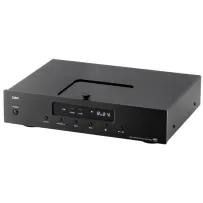
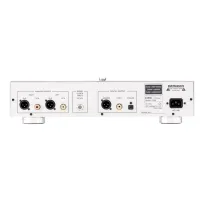
Lettore CD valvolare e convertitore DAC D/A 32bit/384KHz, Ingresso USB asincrono, Uscite Digitali: 1x Ottica Toslink, 1x Coax RCA 75 ohm, stadio di uscita valvolare 12AU7, Telecomando