

 Italiano
 English
Call +39-06-916508973 for informations.
DAC USB Audio: Buying Guide
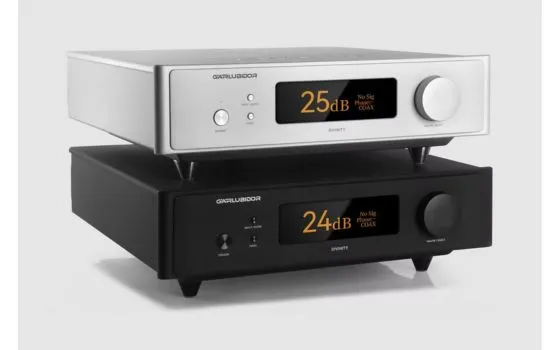
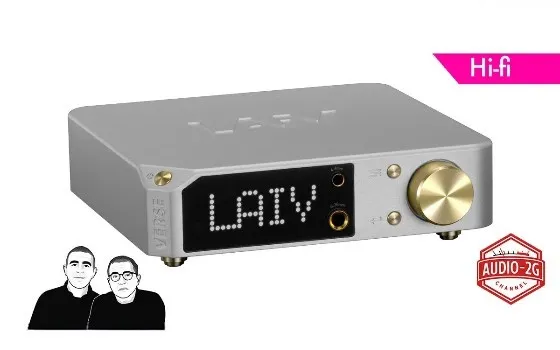
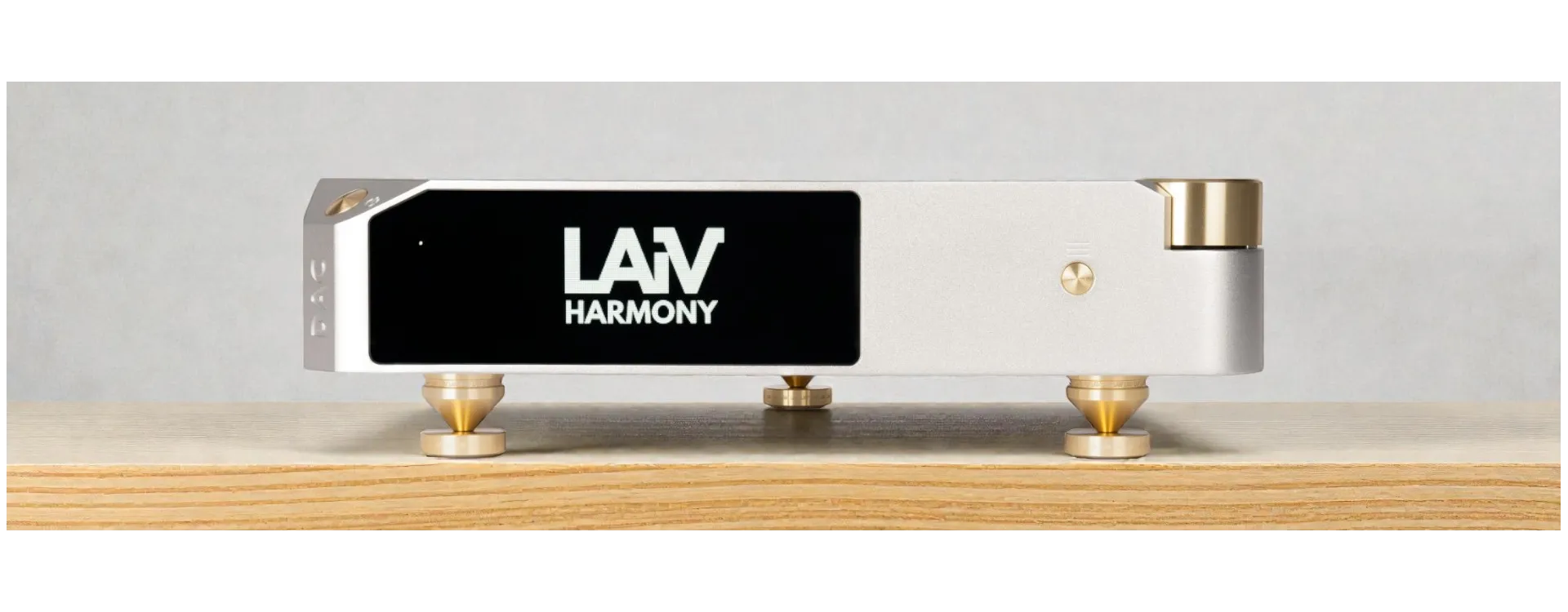
USB Audio DACs are among the most searched and purchased products by audiophiles! The reason is that the digital-to-analog converter completely transforms the sound of the digital source to which it is connected, optical players (CD, DVD, Bluray), smartphones, and computers. These devices come in various forms. There are compact ones and others with typical HiFi component dimensions of 43cm in width. They are characterized by the presence of a considerable number of digital inputs (optical, coaxial, balanced XLR AES/EBU, USB, etc.) and one or more analog line outputs (normally transistor, sometimes with a tube output stage). The Audio DAC, in practice, replaces the source to decode the digital audio signal, performing this operation optimally. Pairing a good DAC with your system often allows you to greatly improve the quality of musical listening.
Some notes on the history of DAC audio converters
Let's start with a bit of history. In the 1980s, the arrival of CD-Audio players and related optical disc players did not initially excite audiophiles, who immediately complained that the Compact Disc Audio lacked realism and warmth compared to listening to vinyl records.
The defect highlighted by audiophiles is attributed to the digital-to-analog conversion section of these early players, which was not very sophisticated at the time, causing a significant amount of errors in the digital signal processing.
The reading mechanism is responsible for reading the optical medium and transmitting the data to the digital-to-analog conversion section (the DAC integrated into the player itself). However, the reading occurs irregularly, leading to decoding errors and consequent data retransmissions.
This phenomenon is called Jitter (which we could define as a time misalignment between the transmitted and received signal) and is the cause of an overlap of musical information at high frequencies that compresses the soundstage and hardens the sound (making it more aggressive and annoying, less fluid).
Since not all listeners are equally sensitive to this phenomenon, its resolution was reserved only for higher-priced CD players, where a higher-quality audio converter is used, with measures to contain and eliminate the negative effects of Jitter.
The downside is the cost of these CD players, which often exceed 2,000 Euros.
This situation, however, has created a new niche in the HiFi market, represented by external audio converters.
Initially produced only by the most renowned HiFi brands, these new and expensive devices (called DACs, acronym for “Digital-to-Analog-Converter”) began to spread among the most demanding audiophiles.
Once connected to the optical or coaxial digital output of any CD player, the digital-to-analog converter handles audio processing more accurately and precisely, correctly synchronizing the digital data stream input and converting it into superior quality analog audio.
Today, nothing has essentially changed, except that audio DACs are extremely affordable and finally within everyone's reach.
Through a USB DAC, for example, it is possible to completely transform the sound coming from a computer or a tablet or smartphone. Therefore, these devices can be connected not only to CD players but to any other digital device capable of transmitting music through a digital data stream.
The DAC market is enriching day by day with new, increasingly performing, and interesting products.
The USB DAC and the importance of being Asynchronous
With the increasing spread of digital music dematerialized from a physical storage medium (the so-called liquid music), the computer has become a frequently used music reading unit by music enthusiasts.
The large data storage capacity, combined with the presence of intuitive user interfaces, has favored its spread even in the musical field.
Unfortunately, however, most computers are equipped with very low-quality sound cards, sufficient for general use but absolutely unsuitable for quality music listening and serious high-fidelity use.
Precisely from this fact, there has been a growing interest in the use of Audio DACs in combination with computers, through the widespread USB (universal serial bus) connection that all modern PCs are equipped with.
In essence, the Audio DAC is a USB peripheral in all respects and is identified by the computer as if it were a sound card.
What changes, however, is that the sound of the music files read by the computer will no longer be reproduced through the integrated sound card in the computer, but will be accurately decoded by the external audio converter and reproduced through its line output, which we will connect to the input of our amplifier or a pair of headphones (if the converter is also equipped with a headphone input).
The advice, however, is to pay close attention to the choice of USB DAC to connect to your computer.
In fact, it is of utmost importance that the USB interface used by the DAC is of Type 2, meaning that the converter is an asynchronous DAC.
USB DAC converters of Type 1, in fact, are extremely susceptible to the phenomenon of Jitter and are equipped with audio quality that is undoubtedly improvable.
On the contrary, an asynchronous USB DAC, that is, class 2, is able to interface with the computer through a much more sophisticated and stable connection, capable of containing (and often completely eliminating) the problems caused by Jitter and digital signal transmission errors, which are the cause of that well-known "cold and digital" sound, typical of low-priced CD players.
In addition, asynchronous USB DACs support high-resolution audio streams, with a sampling frequency of 192 KHz and a depth of 24-Bit. In fact, the latest models can reproduce musical tracks recorded with even higher sampling frequencies and bit depths.
There are more and more online sites selling high-definition liquid music, in high and ultra-high resolution, with studio master quality, to the delight of all high-fidelity listening enthusiasts.
The operation of the asynchronous USB DAC is possible thanks to the presence, inside it, of a communication interface that, while being plug'n'play for Windows or MacOS systems, still requires the installation of specific drivers to operate with maximum performance and possibilities.
It seems incredible, but neither Windows nor MacOS are able to transfer a high-resolution music stream to the DAC natively, with bit-perfect precision (bit-perfect mode).
Among all operating systems, Windows has the worst management of audio output, due to its specific architecture. The consequence is that, if everything is left as it is by default, you get a flat, lifeless sound, with a compressed soundstage and no depth.
This limitation, however, can fortunately be overcome through the installation of specific drivers called ASIO drivers, which can be downloaded for free from many sites.
In the Windows environment, it is sufficient to install the free player Foobar 2000 and its ASIO plugin so that an asynchronous USB DAC can operate at its maximum audio performance, with optimal processing of digital data flow and their conversion into analog signals to be reproduced through an external amplifier.
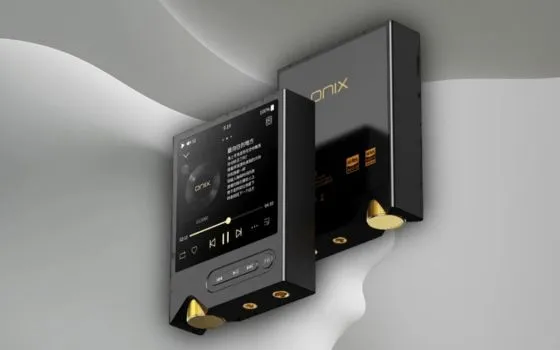
Most USB DACs are also compatible with some latest-generation Android smartphones and tablets, as these devices already have an operating system whose core (the Kernel) already natively supports asynchronous USB peripherals (class 2.0) and even the less sophisticated Type I ones.
Compatibility with class 2 DAC converters allows direct reading of HD liquid music (24/96).
There are also specific Audio DAC converters for Apple devices: for iPhone, iPod, and iPad, but they only allow the reading of music archives in CD Audio quality (with frequencies of 44.1Khz at 16-Bit).
As for the output connections of an audio DAC converter, you usually have a pair of RCA available, while on more expensive models, balanced XLR outputs may also be present.
Network Audio DAC: wired, wireless, or Bluetooth?
As an alternative to direct digital connection, through an optical audio cable, or a coaxial cable, or through USB cables, the transmission between the source of the digital data stream (computer, CD player, transport mechanism, etc.) and the Audio DAC can also occur via wired Ethernet network connection or WiFi or Bluetooth.
Generally, these devices are independent network players, which excellently perform the functions of an audio DAC.
They are much more complex devices than a normal USB DAC, have numerous digital inputs, have analog outputs available for connection to external amplifiers, and can be controlled by remote control or even by specific apps for smartphones and tablets.
Some of them, like the CocktailAUDIO Music Servers, are the most advanced the market can offer: in addition to the function of quality Audio DAC, these devices allow many other functions including the ability to mount an internal or external hard drive, acquire CD-Audio through CD-ripping, record digital and analog audio sources, and much more.
For the communication of audio streams through wired network connections (ethernet or gigabit), wireless (wi-fi), and Bluetooth, numerous network protocols are used. Among these, the most famous and widespread are Apple's Airplay (called Shareplay in CocktailAUDIO Music Servers), DLNA, UPnP, SAMBA, and many others.
All these protocols allow the transfer of musical streams in a "lossless" manner, that is, without any loss of quality compared to the original musical information and, therefore, are absolutely suitable for HiFi high-fidelity musical listening.
The digital data, read from a computer, a network hard drive (NAS), or a music server, is then processed and converted into analog form (and thus audible to the human ear) precisely through the Audio DAC.
The digital transport: what it is and how it works.
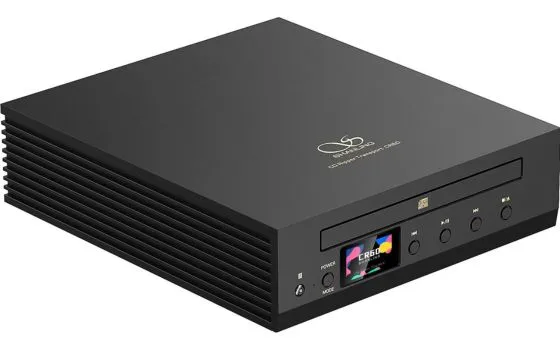
As the name suggests, digital transport is a device or computer system designed to extract and read digital data from mass storage (hard disk, pendrive, optical disk, etc).
A digital transport also has the task of synchronizing the clock (its own or that of the source it is connected to) with that of the audio DAC to which it transfers the data stream.
Its task, therefore, is to prevent and contain the harmful phenomena caused by the aforementioned Jitter.
Digital transport can take the form of a USB interface to connect between a computer and an external DAC (such as the M2Tech Hi-Face II) or it can be integrated within a Music Server, as in the case of CocktailAUDIO.
The result of using a quality digital transport in your HiFi system is to obtain an extremely clean and stable digital signal that, through an I2S, USB Audio Class 2.0, optical Toslink, or 75 Ohm RCA coaxial or 110 Ohm AES/EBU XLR connection, can perfectly reach our external audio DAC, which can then perform the digital-to-analog conversion in absolutely optimal and controlled conditions.
The issue of oversampling.
The technique of oversampling originates in the video field, where it is called up-scaling, and is based on a mathematical process of interpolating the digital data that make up the audio signal to be processed.
For example, it is possible to oversample a data stream at 16-Bit/44.1KHz (WAV, FLAC, MP3 format, etc) into a new data stream at 24-Bit/192Khz.
An increasing number of audio DACs offer this functionality, which however should not be a determining factor for the enthusiast when purchasing.
In fact, the advantages that result from using this technique are not always and necessarily obvious, and more importantly, oversampling is often itself a cause of Jitter.
It is therefore definitely preferable to play an mp3 file at its native resolution, rather than having it processed through the interpolation process of oversampling, to avoid a noticeable degradation of the listening result.
The importance of power supply and operational amplifiers
One of the most important elements to pay attention to when choosing an audio DAC converter is, as with audio amplifiers, its power supply section.
In fact, self-powered USB DACs often deliver inferior sonic results compared to those models that have their own power supply.
The ultimate is always represented by the presence of a toroidal transformer in the power supply section of the DAC, as it allows for an extremely stable current and provides a power reserve to easily handle the most intense and dynamic musical passages.
However, the toroidal transformer is usually present in more expensive audio converters, although there are numerous exceptions (such as the audio DAC converters from Xindak and Aune).
The perceivable advantage in listening is very evident: much more convincing low range, natural and realistic midrange, well-extended high range but never annoying or over the top.
Very often the best audio DACs also allow the replacement of the operational amplifiers present in the output stage. This feature, usually found in more complete and expensive models, allows the more experienced audiophile to modify the DAC's timbre without having to replace the entire device.
Other models of audio DAC converters are equipped with a tube audio output: in the output stage, in fact, there are one or more tubes that soften the digital sound and make it even more natural and pleasant to listen to.
How much to spend on a USB DAC?
As always, even when choosing a USB digital-to-analog converter, you must always consider the rest of your chain.
Just as it wouldn't make much sense to buy a 100 euro DAC if you own a Hi-Fi system worth several thousand euros, you should also avoid unbalancing your audio setup in the opposite direction, for example by purchasing a 4,000 Euro DAC if you perhaps paid 500 euros for the speakers; this, of course, unless you intend to also improve all the other audio components in the medium term, including a high-end audio DAC.
The best DACs on Polaris Audio
Posted in:
Hi-Fi Guides and Tutorials
Related posts
 Sample blog post
Lorem ipsum dolor sit amet, consectetur adipiscing elit, sed do eiusmod tempor incididunt ut labore et dolore magna...
Read more
Amplifiers, is a tube amplifier or transistor better?
In this Guide, we explain why the tube amplifier has come back into fashion and the reasons for its lasting success...
Read more
Come scegliere un amplificatore per cuffie
Piccolo e compatto, dedicato all'ascolto esclusivo per cuffie, questa tipologia di amplificatore nasce con l’intento...
Read more
Quale Music Server per la Musica Liquida?
I server audio (detti anche music server) sono stati concepiti per memorizzare librerie di file musicali, all’interno...
Read more
Why buy a CD Player today?
With the arrival of Digital Music, does it still make sense to buy a CD Player for Compact Disc Audio today? Yes, and...
Read more