
+39-06-916508973
 Italiano
 English
Call +39-06-916508973 for informations.


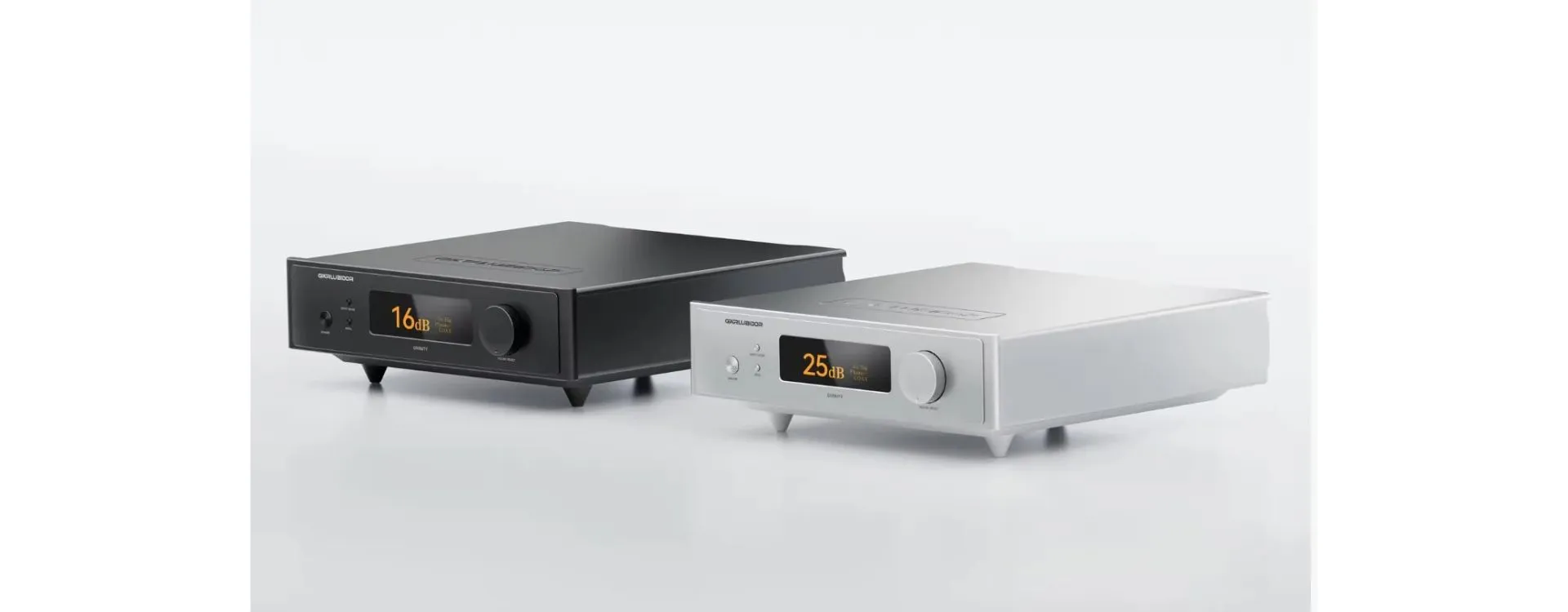
Garlubidor, the new face of R2R
Who is Garlubridor?
Garlubridor is a name that may seem unusual, almost imaginary, and indeed it forms part of the brand’s identity, symbolically representing the meeting of technical precision and musical emotion—a philosophy that aims not merely at sound reproduction, but at conveying the emotional experience contained within the recording. Behind the brand is Guangzhou Denafrips Audio Electronics, a company now well-known among enthusiasts of R2R digital-to-analogue conversion, which has made a significant contribution to the resurgence of this technology, bringing back onto the market ladder DACs that are affordable yet built to extremely audiophile standards. Garlubidor appears to have emerged as a sort of parallel laboratory, designed to experiment with new technical solutions, integrate more modern features and offer a different aesthetic compared to the traditional Denafrips range. Graceful shapes, black or silver finishes, an amber OLED display, a billet-machined aluminium chassis, and three anti-vibration pyramid feet, all combine to create a decidedly refined and elegant look, a far cry from the highly technical aesthetic that characterises Denafrips products. The design philosophy centres on discrete R2R conversion with oversized linear power supplies, a dual-mono configuration, proprietary FPGAs, volume control and an almost obsessive attention to clocking and signal linearity.

Divinity DAC, the top-of-the-range
Divinity, the brand’s flagship model and probably the product that best expresses this new technical identity. It is based on a ladder network of ultra-precise resistors controlled by a proprietary FPGA. The internal architecture incorporates many solutions dear to Denafrips, introducing a more modern user interface and some advanced functions. First and foremost is the volume control, implemented using a resistive ladder, which allows Divinity to drive a power amplifier directly without using a preamp. The conversion then supports PCM signals up to 1536 kHz and DSD1024 – impressive figures for a fully dual-mono architecture, with separate power supplies and dual toroidal transformers dedicated to the analogue and digital sections. This physical separation serves to reduce interference, noise and crosstalk between the different stages of the unit.

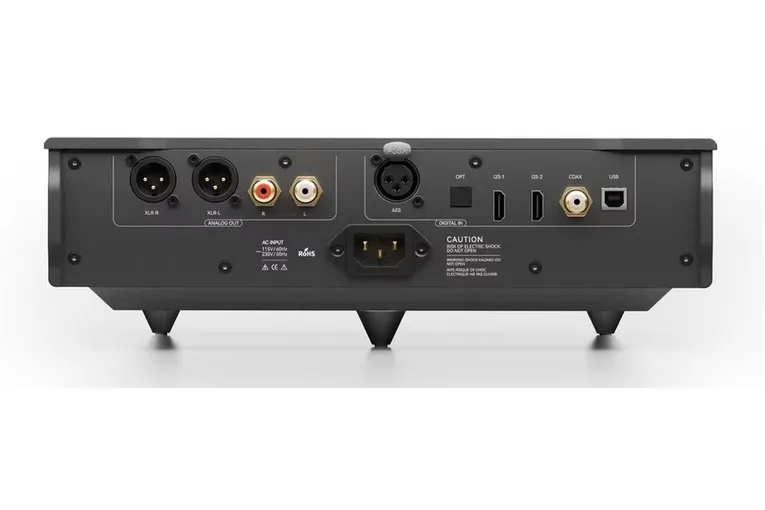
One of the most interesting features of the Divinity is its network of conversion resistors, with a tolerance of 0.005%, coupled with an FPGA that handles dynamic linearity compensation. This is a fundamental aspect because, in modern R2R DACs, it is not enough to have precise resistors: intelligent management of errors is also required, as these errors, however small, are inevitably present in physical components. Garlubidor prefers the signal path to be as direct as possible, avoiding unnecessary processing and keeping the circuitry extremely clean. The DAC is fully balanced and features both XLR and RCA outputs. In terms of inputs, the range is extensive, with 2 HDMI I2S, optical, coaxial, USB-B and AES/EBU
Phantom, second only in name
The second DAC in the range, the Phantom, adopts a similar philosophy but in a more accessible configuration, designed for high-end systems that are less extreme but still focused on the tonal purity typical of discrete R2R architectures. Here too we find discrete conversion, proprietary FPGA management and separate linear power supplies, but with a simplified structure and less complex circuitry compared to the flagship Divinity model.
In the Phantom too, the FPGA plays a central role in digital signal processing. In addition to managing the R2R network, the proprietary processor handles reclocking, jitter reduction and the synchronisation of digital streams, helping to preserve stability and temporal precision. Although it does not match the Divinity’s circuit complexity, the architecture maintains a strong focus on signal integrity and internal noise reduction. The range of inputs and outputs is the same as the Divinity, with both XLR and RCA outputs and 2x HDMI I2S, optical, coaxial, USB-B and AES/EBU inputs. Volume control is also present here, and overall, this second model represents an option capable of retaining much of the sound and technical character of the top-of-the-range model, albeit with a less extreme design. It is aimed at those wishing to enter the world of discrete R2R DACs whilst maintaining a strong focus on musicality, harmonic density and the naturalness of reproduction, without necessarily having to contend with the bulk, cost and complexity of the Phantom.
Divinity Technical Specifications
- Technology: 24-bit discrete R2R
- Resistors: 0.005% selected
- Buffer: FIFO with reclocking
- Formats: PCM up to 1536kHz and DSD1024
- Inputs: USB, optical, coaxial, AES/EBU, 2x I2S
- USB interface: STM32F446 with ARM architecture
- Outputs: 2V RCA analogue, 4V XLR
- Display: 3.12” OLED 256x64
- Frequency response: 20Hz–80kHz
- THD distortion: 0.0025%
- S/N ratio: 125dB
- Crosstalk: 125dB
- Dimensions: 330x332x107
- Power consumption: <20W
- Power supply: 115/230V AC
Phantom technical specifications
- Technology: 24-bit discrete R2R
- Resistors: 0.005% selected
- Buffer: FIFO with reclocking
- Formats: PCM up to 1536kHz and DSD1024
- Inputs: USB, optical, coaxial, AES/EBU, 2x I2S
- Outputs: analogue RCA 2V, XLR 4V
- Display: 2.23” OLED 132x64
- Frequency response: 20Hz–80kHz
- THD distortion: 0.002%
- S/N ratio: 120dB
- Crosstalk: 110dB
- Dimensions: 330x294x73
- Power consumption: <20W
- Power supply: 115/230V AC
Prices
Divinity: €2,350
Phantom: €1,599
Posted in:
News
Related products

Xindak V-30
Price: €1,999.00
Xindak V-30 Amplificatore Valvolare, valvole KT-88 in Push-Pull, 2 valvole...

Xindak XA8800MNU Finale Mono 160 WATT
Price: €1,150.00
Xindak XA8800MNU finali monofonici da 160 Watt transistor di potenza Sanken...

Xindak XA6950(II)
Price: €1,899.00
Xindak XA6950(II) Amplificatore Ibrido integrato con valvole 6922 nella...
Cayin CS-55A KT-88
Price: €2,448.00
Amplificatore valvolare integrato, 40 Watt canale (ultra-lineare), 22 Watt...

ROSE RA180
Price: €6,999.00
ROSE RA180 è un amplificatore integrato all'avanguardia che utilizza le...

Cayin CS-845A
Price: €5,900.00
Cayin CS-845A amplificatore integrato valvolare Single Ended con valvole di...
ROSE RA280
Price: €3,299.00
ROSE RA280 Top-notch Master Integrated Amplifier è un amplificatore integrato...
LAiV Harmony GaNM
Price: €5,779.00
LAiV Harmony GaNM Finali di potenza monofonici con semiconduttori al Nitrurio...
LAiV Harmony HP2A
Price: €3,689.00
LAiV Harmony HP2A, Preamplificatore interamente bilanciato simmetrico a...
Cayin Jazz 80 KT-88
Price: €2,198.00
Amplificatore valvolare push-pull con 4 KT88, 2 12AX7 e 2 12AU7, 40W...
Cayin Jazz 90 KT-88
Price: €2,998.00
Amplificatore Integrato Valvolare cablaggio point-to-point manuale. Eroga 50W...
Cayin MT-35MK3
Price: €1,598.00
Amplificatore valvolare integrato con EL-34 in configurazione Push-Pull in...
Related posts
 Aune N5: accessible and refined
A network player with a built-in DAC, capable of excellent performance despite a price that is an understatement to...
Read more
AUNE NC1 EVO: the heart of time
High-precision Master Clock Audio OCXO with audio-grade linear power supply to significantly enhance any digital source
Read more
N7 & N7D two sides of the same coin
Two variants, N7 Class A headphone amplifier with discrete components, and the N7D which adds a reference...
Read more
Form and function
S17 Pro Evo, a headphone amplifier without compromise. Pure class A with a simply marvellous sound character.
Read more
LAiV Crescendo VERSE: R-2R power in desktop format
LAiV launches Crescendo VERSE: the new desktop R-2R DAC that combines discrete architecture, premium design and...
Read more