
+39-06-916508973
 Italiano
 English
Call +39-06-916508973 for informations.
The perfect rhythm at the heart of your sound
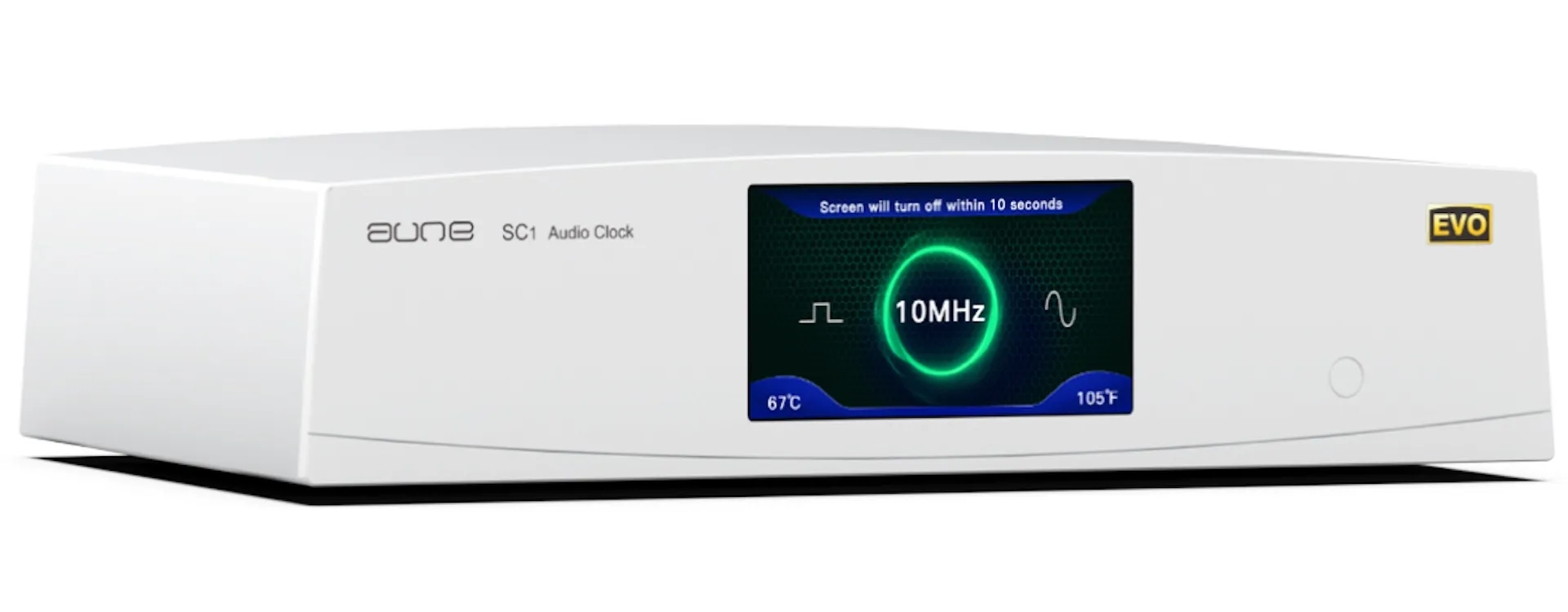
In the world of high-end digital audio, devices such as the SC1 EVO occupy a position that is almost invisible to those unfamiliar with the real challenges of digital playback. It is not a DAC or a power supply, but rather a high-precision clock generator that operates at the very foundation, influencing the way in which all digital devices synchronise the audio stream. A clock generator, to put it simply, is like an orchestra conductor: it does not produce sound, but sets the tempo for everyone, or like a precise drummer who provides consistency and timing to the performance.
What is a clock generator used for?
But let’s go into more detail: to understand the purpose of all clock generators, and the SC1 EVO in particular, we need to start with the concept of the clock. In a digital audio system, every conversion and every data transfer depends on extremely precise timing – the clock. Any slippage, however slight, results in jitter – a temporal variation in the signal that can compromise the final analogue reconstruction. This is where a device like the SC1 EVO comes into play: providing a stable, consistent and precise time reference, capable of synchronising DACs, streamers and other digital sources.
OXCO Precision
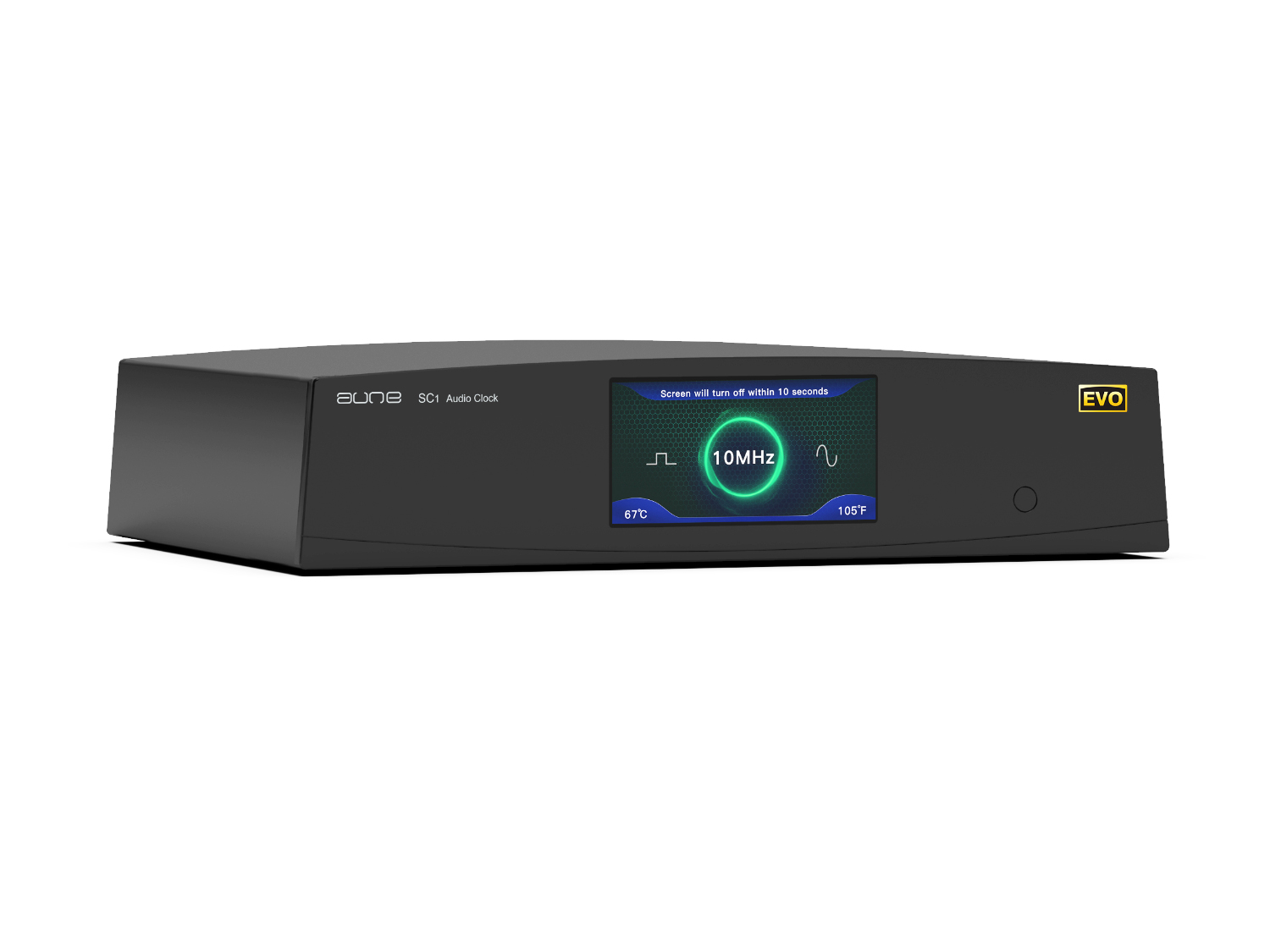
The Aune SC1 EVO was designed precisely with this objective in mind, but it achieves it through an approach that goes beyond mere digital engineering. At the heart of the system lies an OCXO oscillator – a temperature-controlled quartz crystal – designed to maintain the highest possible stability over time. This type of technology, typically used in scientific and telecommunications fields, has been adapted here for audio applications, with fine-tuning geared towards sound quality. The result is an extremely stable 10 MHz reference frequency, with an accuracy of around 50 ppb (parts per billion) and a stability of less than 0.01 ppb – figures that place the device in a decidedly high-end category.
.jpg)
Meticulous attention to every detail
But what makes the SC1 EVO so interesting is not just its theoretical precision, but the way in which this is implemented. The power supply, for example, is designed with a multi-stage symmetrical architecture, featuring cascade regulation and a dedicated linear regulator derived from the latest-generation ESS solutions. This enables a very high power supply rejection ratio (PSRR) of approximately 80 dB. PSRR stands for Power Supply Rejection Ratio and is expressed in decibels: it measures the ratio between the noise present on the power supply and the noise that actually manages to pass through to the signal. A value of 80 dB is very high and means that noise is attenuated by approximately 10,000 times, with direct benefits in terms of clarity, stability and precision of sound.
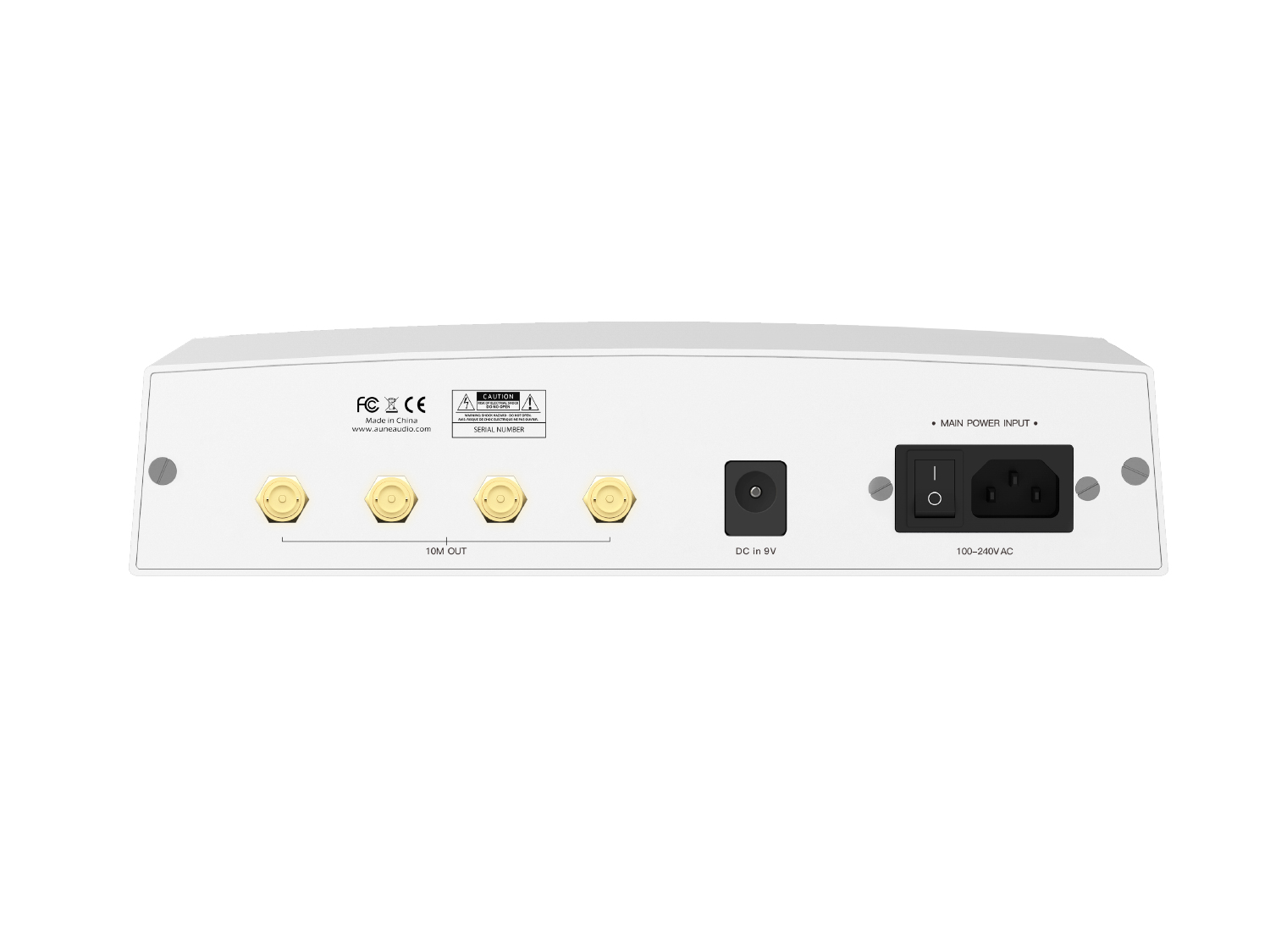
Another distinctive feature is its operational flexibility. The SC1 EVO can be powered either by AC, with universal 110–230 V support, or by 9 V DC, allowing the use of external linear power supplies or even batteries. This capability paves the way for further optimisations, particularly in more sophisticated systems, where every component in the chain can influence the final result. From a functional perspective, the device offers four 10 MHz outputs, comprising two sine wave signals and two square wave signals. This choice is no accident: the two waveforms have different characteristics and can interact differently with connected devices, also offering a degree of system ‘voicing’. All outputs can operate simultaneously, maintaining extremely precise phase synchronisation, with deviations of less than infinitesimal
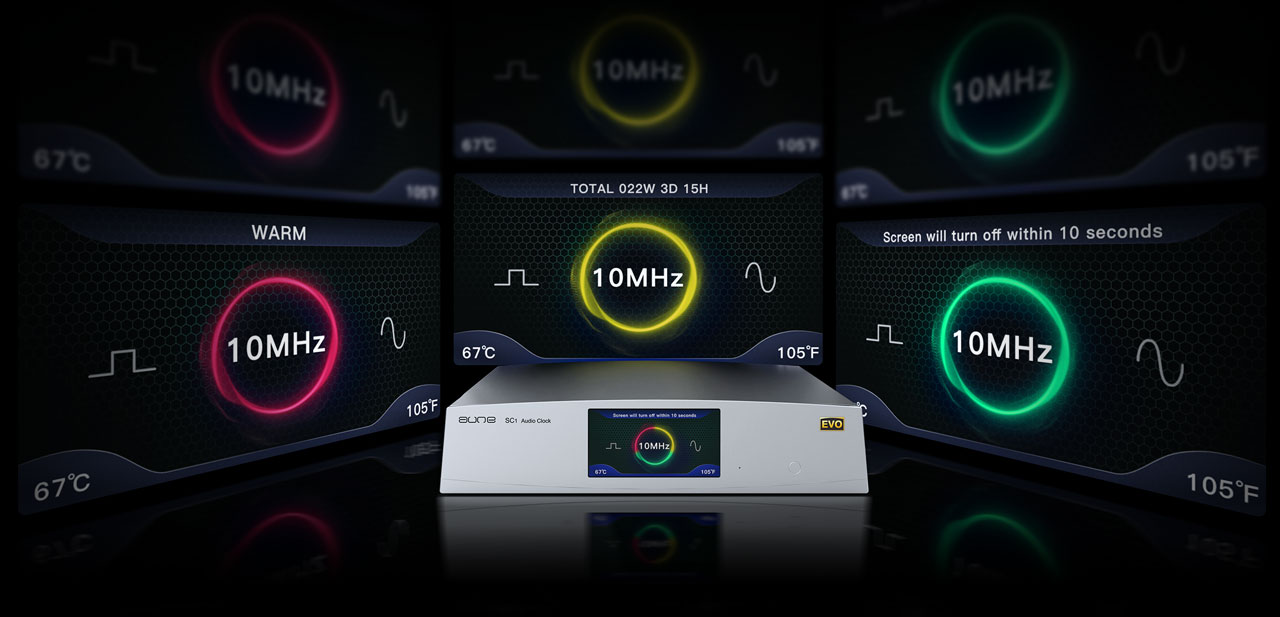
The user interface, which might seem secondary in a device of this type, has in fact been carefully designed. A colour display shows the clock’s operating status, including the oscillator warm-up phase – a crucial step in achieving maximum stability. The system uses an intuitive colour-coding scheme to indicate the machine’s status, making its operation immediately clear. From a sonic perspective, the effects of a master clock become immediately apparent. The reduction in jitter translates into enhanced microdynamics, greater definition of sound contours and a more stable and deeper soundstage. It is very important to emphasise that a device of this kind does not operate in isolation, but within an ecosystem.
A significant upgrade
The benefits are all the more evident the more the rest of the chain is able to utilise an external clock. High-end DACs and streamers designed to accept a 10 MHz reference are the ideal partners, whilst in simpler systems the impact may be less pronounced. In terms of construction, the SC1 EVO follows the Aune tradition, with a precision-machined aluminium chassis, compact yet solid dimensions, and an internal layout designed to reduce interference and vibrations. It is not a flashy piece of kit, but it conveys a sense of rigour and functionality, perfectly in keeping with its technical nature. The Aune SC1 EVO is aimed at a discerning audience, willing to intervene at the deepest levels of the audio chain to achieve a qualitative improvement. It is not an immediate or universal upgrade, but a refined tool, capable of taking an already advanced system to a further level of coherence, precision and musicality.
About Aune Audio:
AUNE is an Asian manufacturer that has gradually established itself in the hi-fi and personal audio landscape thanks to a strongly research-oriented approach. The brand was founded in the mid-2000s, initially focusing on the development of digital circuits and D/A converters, before expanding its range to include solid-state and hybrid amplifiers, balanced solutions, DACs with increasingly sophisticated architectures and, subsequently, magnetoplanar headphones.
Technical specifications
- Type: OCXO audio master clock
- Output frequency: 10 MHz
- Outputs: 4 (2 sine wave + 2 square wave)
- Frequency accuracy: approx. ±50 ppb
- Frequency stability: < 0.01 ppb
- Jitter: < 200 fs
- Phase noise: up to –160 dBc (depending on frequency)
- Output impedance: 50 ohms
- Output level: ≥ 9 dBm (square), ≥ 5 dBm (sine)
- Power supply: AC 110–230 V / DC 9 V
- Power supply architecture: low-noise multi-stage linear regulation
- PSRR: approx. 80 dB
- Power supply output noise: ~1 µV
- Warm-up time: approx. 10 minutes
- Interfaces: BNC
- Display: colour with operating status indication
- Dimensions: approx. 288 × 211 × 63 mm
- Weight: approx. 2 kg
Posted in:
News
Related products
Aune N5 EVO
Price: €429.00
L'Aune Evo N5 è un lettore di rete basato su un'architettura che favorisce...
Shanling CT90
Price: €899.00
Shanling CT90 meccanica di trasporto CD ad alta fedeltà, basata su un sistema...
Related posts
 Aune N5: accessible and refined
A network player with a built-in DAC, capable of excellent performance despite a price that is an understatement to...
Read more
AUNE NC1 EVO: the heart of time
High-precision Master Clock Audio OCXO with audio-grade linear power supply to significantly enhance any digital source
Read more
N7 & N7D two sides of the same coin
Two variants, N7 Class A headphone amplifier with discrete components, and the N7D which adds a reference...
Read more
Form and function
S17 Pro Evo, a headphone amplifier without compromise. Pure class A with a simply marvellous sound character.
Read more
LAiV Crescendo VERSE: R-2R power in desktop format
LAiV launches Crescendo VERSE: the new desktop R-2R DAC that combines discrete architecture, premium design and...
Read more