
+39-06-916508973
 Italiano
 English
Call +39-06-916508973 for informations.
ONIX XMT20, pure transport without compromise
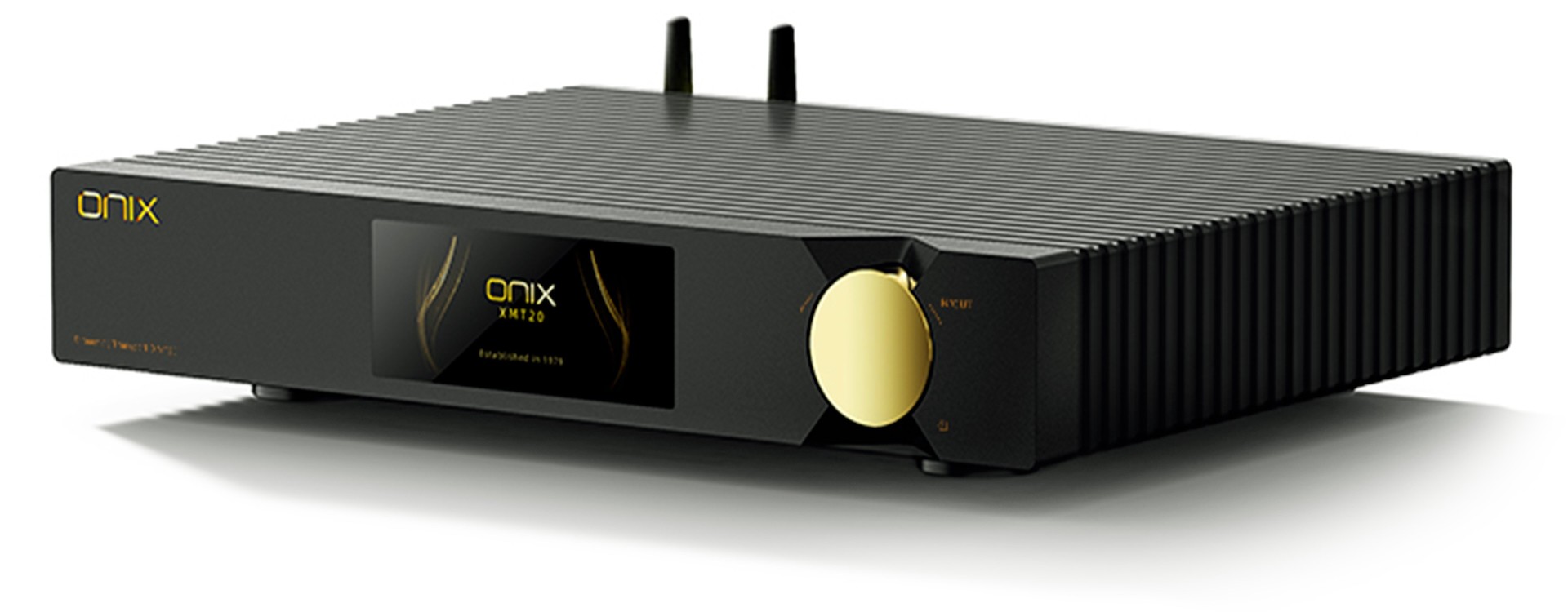
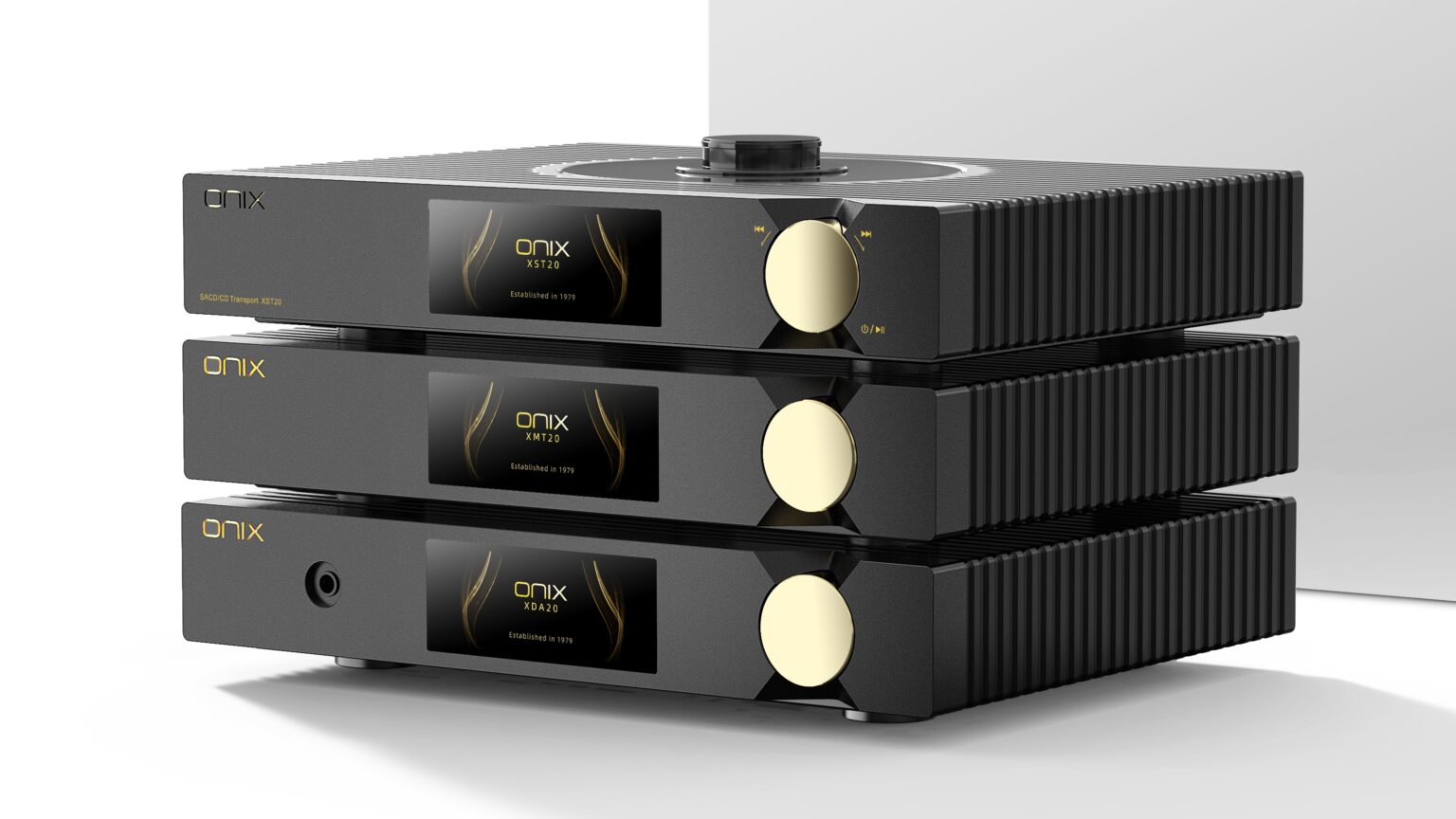
Onix, a brand with British roots, has strengthened its presence in the high-end market in recent years thanks to products characterized by a strong engineering approach and modular design. Each component of the ecosystem has a specific and well-defined function: this separation allows for the optimization of all processes and achieves a higher quality level compared to many integrated solutions. The design of the XMT20 follows Onix's new direction and is complemented by the XTS20 mechanics and the XDA20 DAC. The display is a 3.4" color OLED touch, mounted on a milled aluminum frame with non-standard dimensions, 32 cm wide. On the right stands the typical golden knob that characterizes the entire range, through which — along with the display — it is possible to control the device.
The XMT20 is built around a proprietary software platform based on Linux, developed to ensure operational stability and quick response during daily use. The interface is designed to be simple and immediate, allowing for quick access to both online services and local music libraries present on the home network or within the player. Control can be done via the front touchscreen display, remote control, or through the Eddict Controller app for smartphones and tablets. In terms of connectivity, the device supports Tidal Connect and Qobuz Connect and is compatible with the Roon ecosystem, with DLNA/UPnP and AirPlay 2, to ensure maximum integration even in multiroom systems. The supported formats range from PCM up to 32 bit/768 kHz to DSD512, effectively covering any current audio standard.

A particularly interesting aspect concerns the management of locally stored music. The streamer can play files from USB devices and integrates a slot for SSD M.2 NVMe, allowing for the setup of an internal music library. It is also possible to connect an external CD player via USB to play discs directly or perform ripping, with automatic retrieval of metadata and covers through the app. On the hardware side, the project aims for maximum precision in signal transmission. The internal layout physically separates the different functional sections — power supply, processing, and outputs — with the goal of reducing interference and electrical noise along the signal path. The heart of the power supply is a Talema toroidal transformer of about 25 VA, which ensures stable voltage with less high-frequency interference. Numerous independent regulators isolate the most sensitive parts — clock and digital interface — from potential disturbances generated by the processor or network subsystem, so that each block of the device operates on a stabilized power line.
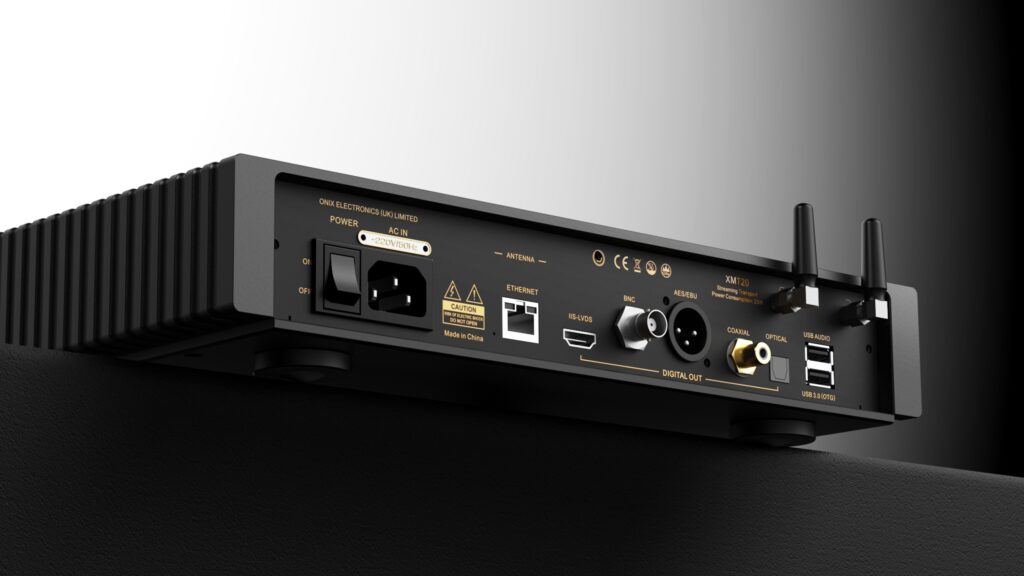
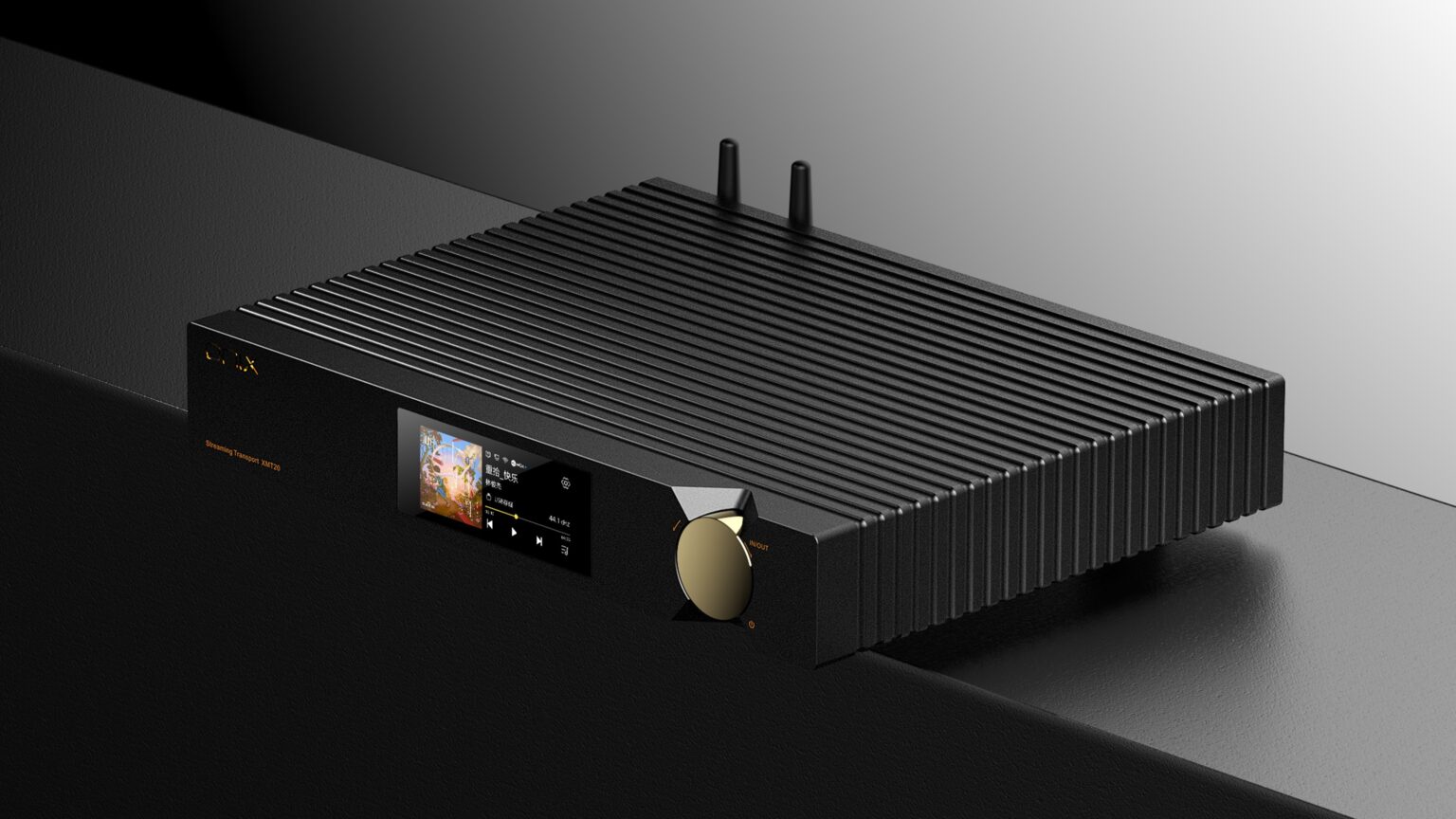 The signal management section is built around an embedded Linux streaming platform, optimized exclusively for audio playback. The processor manages the network, streaming services, and local library, but the digital stream intended for the outputs is routed to dedicated circuits that handle synchronization and signal distribution. A central role is played by the clock system: the XMT20 uses two KDS precision quartz oscillators, one for frequencies multiple of 44.1 kHz and the other for those derived from 48 kHz. This configuration, now considered a standard in high-level devices, avoids intermediate conversions and reduces jitter. The signal distribution to the various outputs is entrusted to dedicated interface circuits, while the I²S output is implemented with the support of an FPGA. The programmable circuit allows adapting the pin mapping of the HDMI interface used for I²S, offering different configurations selectable by the user — a practical solution, given that the I²S standard is not uniform among various DAC manufacturers. From the circuit layout perspective, signal paths are kept as short as possible and noisy digital domains are separated from those sensitive to timing. The sections related to the outputs — AES/EBU, coaxial, BNC, and optical — are located near the rear panel to preserve signal integrity. The mechanical construction also contributes to the device's electrical behavior. The monoblock chassis acts as a shield against external electromagnetic interference; its mass and structural rigidity also limit vibrations and resonances which, although not directly affecting a digital signal as with analog components, can have indirect effects on timing circuits. The rear panel offers a rich array of connections: optical, coaxial, BNC, AES/EBU, USB, and I²S, ensuring compatibility with any DAC on the market. The XMT20 is, in summary, a component designed for those who want to build a modular digital system without concessions to sound quality: custom software, broad compatibility with major streaming services, and full support for high-resolution formats make it one of the most complete solutions in the category.
About ONIX
ONIX was founded in 1979 in Brighton, UK, by Tony Brandy, who initially built amplifiers in a small workshop. The Onix Hi-Fi brand was launched in 1984 with the help of expert manager Michael O'Brien, and from 1984 to 1990, the team produced hi-fi amplifiers sold in 28 countries worldwide. In the 1990s, the company underwent restructuring and came under the protective wing of Rogers Speakers, which allowed the brand to enter the speaker market and rapidly develop products in this category. In 1997, the Onix brand and its intellectual property were acquired by a Taiwanese company led by Pu Hsao Hsiung. His vision is to continue the British tradition in creating hi-fi equipment using new technologies. The ONIX brand currently offers high-end CD players, high-end integrated amplifiers, and new products like the Miracle system and the Mystic XP1 portable DAC/AMP. These products are introduced to the global market with the support of Shanling Audio and its network of dealers.
Technical features:
- Inputs: wifi, RJ45, USB-A
- Outputs: I2S, BNC 75Ω, AES/EBU, Coax, Optical, USB-A
- Compatibility: DLNA, AirPlay2, TIDAL connect, Qobuz connect, Roon Ready
- SSD: M.2 NVMe
- Supported files: DSD, ISO, DXD, APE, FLAC, WAV, AIFF, AIF, DTS, MP3, WMA, AAC, OGG, ALAC, MP2, M4A, AC3, M3U, M3U8, OPUS
- Supported frequencies: up to 24/768
- Power supply: 230VAC, 50Hz
- Dimensions: 32X24X7.2
- Weight: 5.2k
Price: 2399 €
Posted in:
News
Related products

LAiV Harmony DAC R2R
Price: €3,689.00
Balanced Discrete R2R DAC OS/NOS 768kHz DSD256 Black Il DAC Harmony di Laiv...

Denafrips ARES 15TH R2R DAC
Price: €1,513.00
Architettura Proprietaria R2R + DSD 1024, True balanced, Decodifica DSD...
Denafrips TERMINATOR 15TH R2R DAC
Price: €7,675.00
Convertitore DAC di Riferimento 15Th Anniversary con architettura...

Denafrips VENUS 15TH R2R DAC
Price: €5,030.00
DAC R2R NOS Balanced 1536kHz DSD1024, Denafrips torna con la quindicesima...

LAiV Harmony uDAC R2R
Price: €1,350.00
Balanced Discrete R2R DAC OS/NOS 768kHz DSD256 il µDAC Harmony di LAiV...
ONIX Zenith XDA20
Price: €2,599.00
ONIX Zenith XDA20, Convertitore DAC, Amplificatore per cuffia TPA6120, Doppio...
LAiV Crescendo VERSE R2R
Price: €945.00
Crescendo VERSE è un DAC R-2R, hub digitale e analogico all-in-one progettato...
Related posts
 Aune N5: accessible and refined
A network player with a built-in DAC, capable of excellent performance despite a price that is an understatement to...
Read more
AUNE NC1 EVO: the heart of time
High-precision Master Clock Audio OCXO with audio-grade linear power supply to significantly enhance any digital source
Read more
N7 & N7D two sides of the same coin
Two variants, N7 Class A headphone amplifier with discrete components, and the N7D which adds a reference...
Read more
Form and function
S17 Pro Evo, a headphone amplifier without compromise. Pure class A with a simply marvellous sound character.
Read more
LAiV Crescendo VERSE: R-2R power in desktop format
LAiV launches Crescendo VERSE: the new desktop R-2R DAC that combines discrete architecture, premium design and...
Read more